
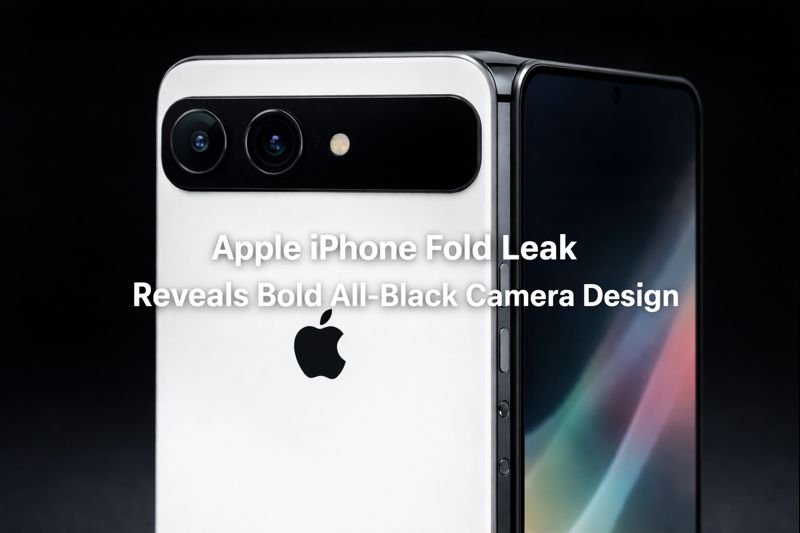
For years, foldable smartphones have been dominated by Android brands, with Apple watching carefully from the sidelines. Now, fresh leaks surrounding the iPhone Fold suggest that Apple is finally preparing to enter the foldable race—but on its own terms. One detail, in particular, has grabbed attention across the tech world: an all-black camera plateau, unlike anything we’ve seen on previous iPhones.
At first glance, it may sound like a small cosmetic tweak. But when you look closer, this design choice reveals a lot about how Apple is thinking—not just about foldables, but about the future of the iPhone itself.
A Camera Design That Breaks Apple’s Own Rules
Apple has long been obsessed with visual balance. Recent iPhones have camera modules that blend into the phone’s body color, creating a unified, almost seamless look. The leaked iPhone Fold appears to break that tradition.
According to multiple reports, Apple is planning a horizontal camera plateau finished entirely in black, regardless of the phone’s body color. Whether the device is white, silver, or another shade, the camera bar will stand out—deliberately.
This isn’t an accident. It looks like a conscious attempt to make the camera system visually distinct, possibly to:
- hide sensors more effectively
- reduce visual clutter on a wider foldable body
- or even signal a new premium identity for foldable iPhones
In a market crowded with foldables that look increasingly similar, Apple seems eager to make sure its first attempt is instantly recognizable.
Why a ‘Camera Plateau’ Makes Sense on a Foldable
Foldable phones are physically different from regular smartphones. They’re thicker, wider, and structurally more complex. A traditional square or raised camera bump might feel awkward on a device that folds in half.
A horizontal camera plateau, however, spreads the weight and design across the back panel. It aligns better with the foldable’s proportions and may even help with stability when the phone is placed flat on a table.
There’s also a practical angle. A black finish hides fingerprints, dust, and sensor outlines better than lighter colors. For a premium device expected to cost significantly more than a standard iPhone, that subtle polish matters.
Apple’s Foldable Philosophy: Late, But Careful
Apple is famously late to trends—but rarely careless. The company waited years before adopting 5G, OLED displays, and larger phone sizes. Foldables are no different.
Leaks suggest Apple has been working behind the scenes to solve issues that plague existing foldable phones:
- visible screen creases
- fragile hinges
- compromised battery life
Reports point to a nearly crease-less inner display, which, if true, would be a major technical achievement. Apple appears more interested in getting foldables “right” than getting them “first.”
The camera plateau fits into this philosophy. It’s not flashy for the sake of attention—it looks purposeful, engineered, and restrained.
Button Placement and iPad Influence
Another interesting leak detail is the unusual button layout. The volume buttons are reportedly placed toward the top edge, similar to some iPad models. The left side may remain completely clean, while the right side houses:
- a power button with Touch ID
- a camera control button
This hints at Apple borrowing heavily from its iPad design language. In many ways, the iPhone Fold seems less like a stretched iPhone and more like a pocket-sized iPad that folds.
That approach makes sense. When unfolded, the phone is expected to offer nearly tablet-like screen space, making multitasking, reading, and content consumption feel more natural.
Touch ID Over Face ID: A Practical Choice
Leaks also suggest Apple may skip Face ID on the iPhone Fold, opting instead for Touch ID built into the power button. This isn’t a step backward—it’s practical.
Foldable phones are used in multiple orientations: folded, unfolded, tent mode, and more. Face ID can struggle in such scenarios. A physical fingerprint sensor is faster, more reliable, and easier to access regardless of how the device is being held.
Again, this shows Apple prioritizing real-world usability over flashy features.
What the All-Black Camera Plateau Symbolizes
Beyond aesthetics, the black camera bar feels symbolic. It suggests Apple wants to:
- separate camera identity from body color
- emphasize hardware over decoration
- and reset design expectations for iPhones
If this leak is accurate, future iPhones—foldable or not—could adopt more contrast-driven designs. The era of subtle, blended camera bumps may be slowly ending.
It also sends a message to competitors: Apple isn’t copying existing foldables. It’s redefining how one should look.
Pricing and Positioning: Not for Everyone
Early price rumors suggest the iPhone Fold could cost well over $2,000, putting it firmly in luxury territory. This isn’t meant to replace the standard iPhone. It’s likely aimed at:
- professionals
- early adopters
- and users who want one device to replace both phone and tablet
The design choices—including the bold camera plateau—match that premium positioning. This device doesn’t want to blend in. It wants to stand apart.
The Bigger Picture
If the leaks hold true, the iPhone Fold won’t just be another foldable phone. It will be Apple’s statement on where mobile computing is headed next.
The all-black camera plateau might seem like a small detail, but it represents a bigger shift: Apple is willing to break its own design habits when the product demands it.
For a company known for consistency, that’s a big deal.