
For years, Spotify has been more than just a music streaming app. It has slowly evolved into a daily companion for millions of people — whether they’re commuting, studying, working out, or just zoning out with headphones on. Now, with its latest update, Spotify is making one of its most-loved features even better: song lyrics.
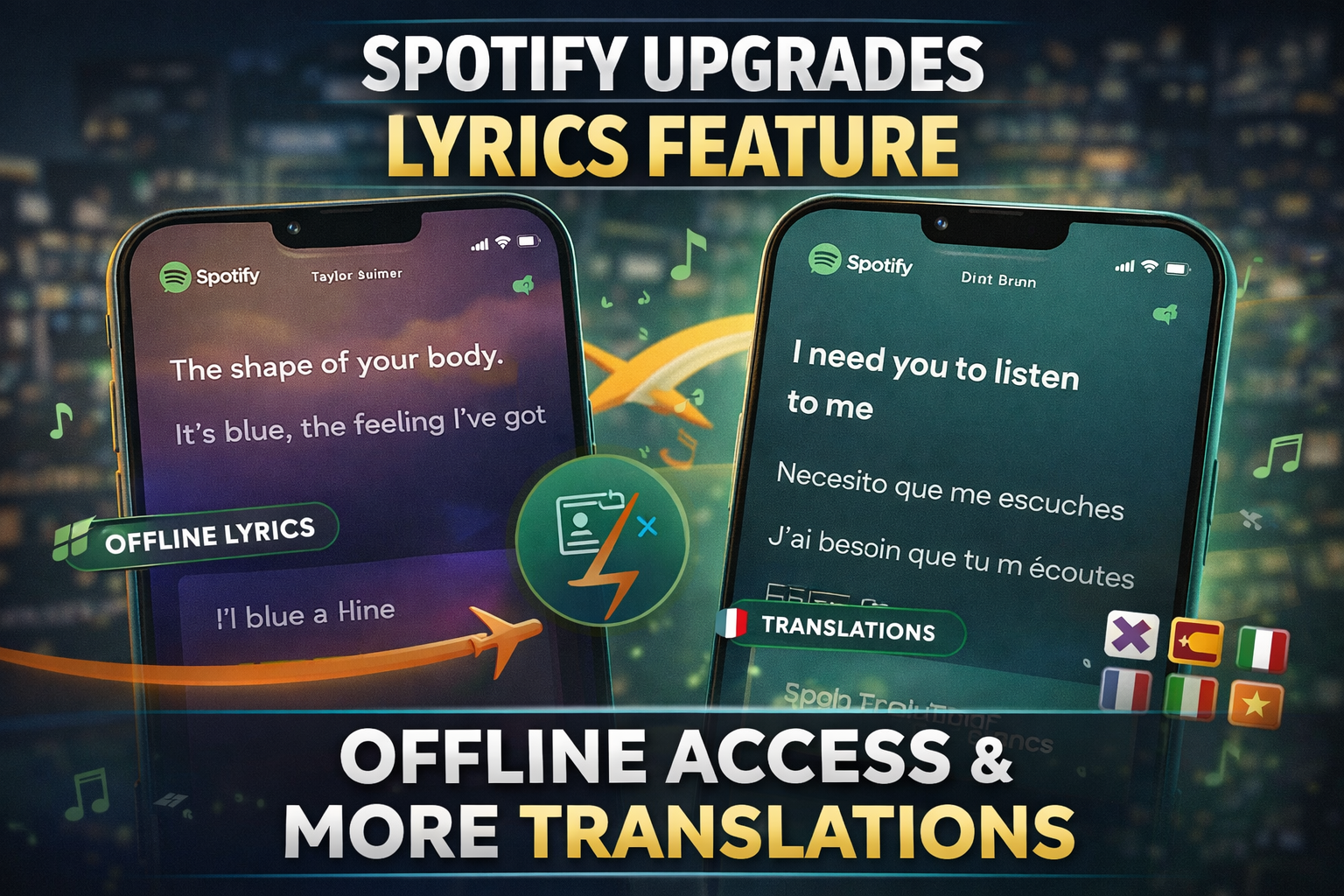
The platform has rolled out a significant upgrade to its lyrics feature, introducing offline access and expanded translations. On paper, this might sound like a small tweak. In reality, it changes how people interact with music, especially in a world where connectivity isn’t always guaranteed and music increasingly crosses language barriers.
This update is less about flashy innovation and more about practical listening — and that’s exactly why it works.
Lyrics Have Become Part of the Listening Experience
Not too long ago, lyrics were something you searched for separately — often on clunky websites filled with ads. Spotify changed that by integrating synced lyrics directly into the listening screen, turning songs into something closer to karaoke-style experiences.
For many users, lyrics are no longer optional. They help listeners:
- Understand meaning
- Sing along
- Learn new languages
- Feel more connected to the artist
By upgrading this feature, Spotify is acknowledging a simple truth: people don’t just listen to music anymore — they engage with it.
Offline Lyrics: A Small Feature with Big Impact
The standout addition in this update is offline lyrics access. Until now, lyrics disappeared the moment users lost their internet connection. That might not seem like a big deal — until you’re on a flight, traveling through low-network areas, or trying to save mobile data.
With offline lyrics:
- Commuters can follow songs underground or on long journeys
- Travelers can enjoy music without worrying about roaming data
- Students and professionals can save data while still enjoying full features
This move makes Spotify’s offline mode feel more complete. Previously, users could download songs but still lost part of the experience. Now, lyrics stay with the music, even when the internet doesn’t.
More Translations, Wider Reach
The second major improvement is expanded lyrics translations. Music today is global. A Korean pop track, a Spanish ballad, or an Indian indie song can go viral worldwide in days. But language often remains a barrier.
By offering more translations, Spotify is helping users:
- Understand songs in foreign languages
- Appreciate songwriting beyond sound
- Connect emotionally with global music
This is especially important for younger listeners, who are increasingly open to music from different cultures. Lyrics translations turn unfamiliar songs into relatable experiences, not just catchy sounds.
Why Spotify Is Focusing on Features Like This
Spotify operates in a highly competitive space. Rivals offer similar music catalogs, similar pricing, and similar sound quality. Where Spotify consistently tries to stand out is user experience.
Instead of reinventing music streaming, Spotify improves how people interact with it. Features like:
- Wrapped
- Collaborative playlists
- Real-time lyrics
- AI-powered recommendations
All follow the same philosophy: keep users engaged inside the app for longer.
Lyrics, especially offline and translated ones, encourage active listening rather than passive background play. And active users are more loyal users.
Who Benefits the Most from This Update?
While the update is useful for everyone, certain groups will feel the impact more strongly:
1. Daily commuters
People who listen to music during travel often face patchy networks. Offline lyrics remove friction completely.
2. International music fans
Listeners exploring music beyond their native language now have better context and understanding.
3. Students and learners
Lyrics translations can subtly support language learning and pronunciation.
4. Premium subscribers
Offline lyrics add more value to paid subscriptions, making the upgrade feel worthwhile.
Is This Feature Available to Everyone?
Spotify has not positioned this as a limited or experimental feature. It is being rolled out gradually, meaning users may see it appear automatically after updating the app. Availability may depend on:
- Region
- Song licensing
- Language support
Over time, Spotify is expected to expand both offline lyrics coverage and translation accuracy.
A Quiet But Smart Product Move
What makes this update interesting is that it’s not loud. There’s no dramatic redesign, no viral announcement, no radical change in pricing. And yet, it solves real problems users face every day.
In product terms, this is a quality-of-life upgrade — the kind that doesn’t grab headlines but quietly improves satisfaction.
Spotify understands something many tech companies forget: not every improvement needs to be disruptive. Some just need to be useful.
The Bigger Picture: Music Without Barriers
At its core, this update supports a larger goal — making music more accessible. Whether the barrier is language, connectivity, or convenience, Spotify is slowly removing friction points.
Offline lyrics remove the internet barrier.
Translations remove the language barrier.
Together, they make music feel more personal, more inclusive, and more immersive.
What Could Come Next?
If Spotify continues down this path, future improvements could include:
- User-selected translation languages
- Lyric explanations or annotations
- Artist-written lyric notes
- Smarter syncing for live versions
None of these would change what Spotify is — but all would deepen how people experience music on the platform.
Final Thoughts
Spotify’s lyrics upgrade may not be revolutionary, but it is thoughtful. By adding offline access and expanding translations, Spotify is strengthening one of its most human features — the words behind the music.
In an era of constant updates and feature overload, this is a reminder that sometimes the best upgrades are the ones that simply make life easier for users.