
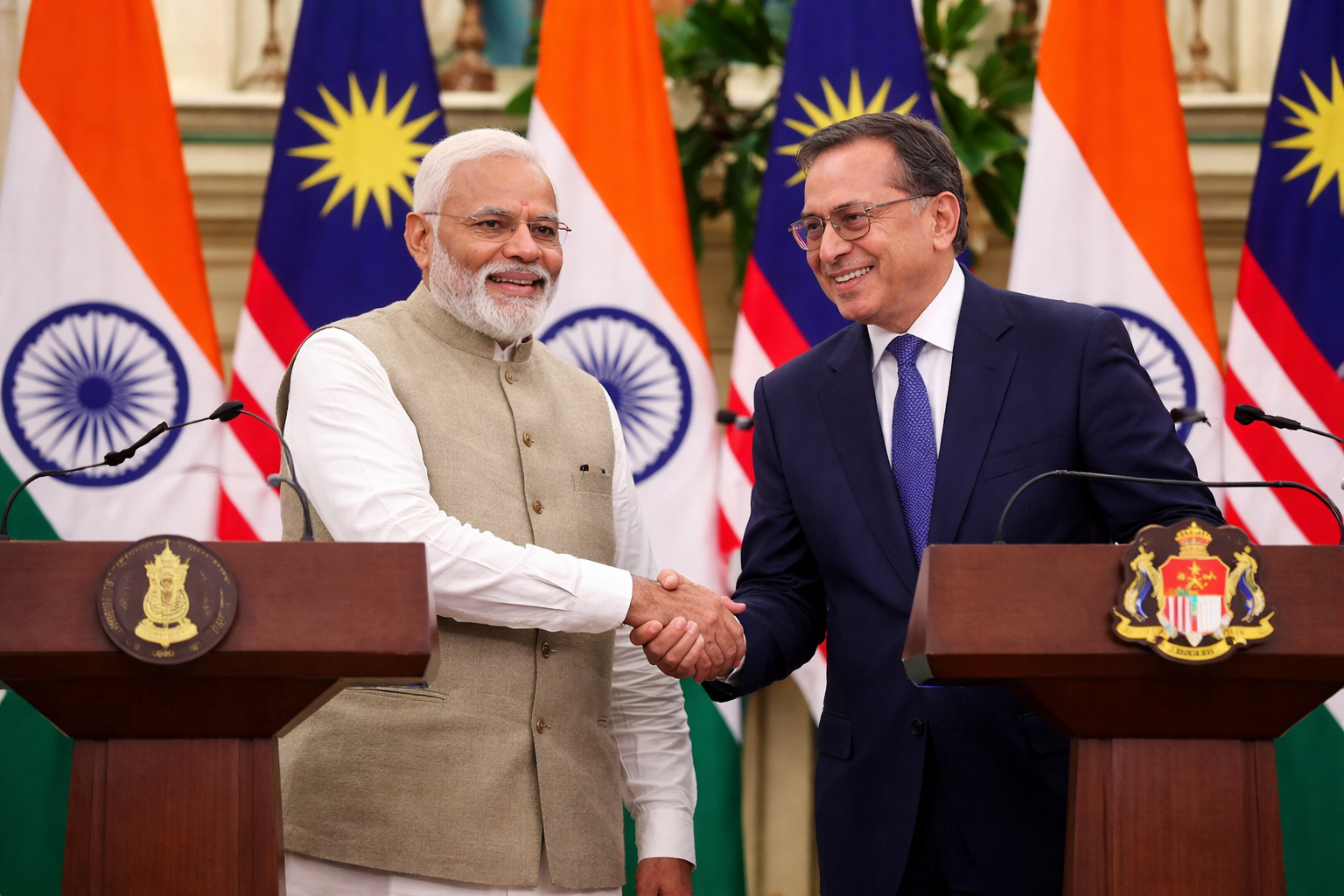
India and Malaysia say they want to do more business together and work more closely on defence. That was the broad message after recent talks between officials from both sides.
There were no dramatic announcements. No big numbers. Just a shared sense that the relationship could be doing more than it currently is.
For India and Malaysia, the conversation wasn’t about starting something new. It was about fixing what already exists.
Trade: Familiar, But Not Fully Used
Trade between the two countries has been steady for years. It hasn’t collapsed, but it also hasn’t grown the way either side would like.
Officials talked about easing some of the friction businesses face — paperwork, regulations, slow approvals. These are not new complaints. Companies are familiar with them. Governments are too.
Manufacturing, pharmaceuticals, agriculture, digital services, renewable energy — the usual list came up. What mattered more was the admission that progress has been uneven.
Indian companies have expanded in Malaysia. Malaysian firms have looked toward India. Still, trade has more or less plateaued.
That’s the part both sides seem keen to change.
Supply chains also came into focus. Recent global disruptions left many countries exposed. India and Malaysia both want fewer weak points. Cooperation, they believe, could help spread risk instead of concentrating it.
Defence Gets More Attention Than Before
Defence cooperation wasn’t treated as an afterthought.
Both sides spoke about stepping up military engagement. That includes training exchanges, joint exercises, and closer contact between armed forces.
Maritime security came up more than once. That’s not surprising. Malaysia sits along some of the world’s busiest sea lanes. India plays a growing role in the Indian Ocean region. Their interests overlap.
Officials did not spell out new defence agreements, but the direction was clear. More interaction. More familiarity. Less distance.
There was also interest, at least quietly, in India’s defence manufacturing push. Malaysia appears open to cooperation in areas like maintenance and training. Technology discussions remain early and cautious.
The Bigger Picture Is Hard to Ignore
The talks didn’t happen in a vacuum.
India has been trying to deepen ties across Southeast Asia for years. Malaysia, meanwhile, has been balancing relations with larger powers while keeping regional options open.
Both sides spoke in general terms about stability, international rules, and peaceful cooperation. No one named specific challenges, but the context was obvious.
The Indo-Pacific remains uncertain. Nobody wants surprises.
People Matter Too
Away from trade and defence, officials also touched on social ties.
Malaysia’s Indian-origin community continues to play a role in keeping the relationship grounded. Education, tourism, and cultural exchanges still matter, even if they don’t dominate headlines.
There was some discussion about student exchanges and academic cooperation. These initiatives rarely grab attention, but they tend to last longer than political cycles.
No Illusions About Easy Progress
Despite the positive language, neither side suggested results would come quickly.
Trade negotiations can stall. Defence cooperation takes time. Past agreements have sometimes slowed once the spotlight moved on.
Analysts point out that follow-through will matter more than statements.
This time, though, both governments seem more aware of what’s at stake. The global environment has changed. Middle powers are looking for reliable partnerships instead of putting all their weight behind one relationship.
A Signal, Not a Shift
The latest pledge doesn’t transform India–Malaysia ties overnight.
What it does is signal intent. Both sides appear willing to invest more attention and effort into the relationship, without overselling what can realistically be achieved.
No bold promises. No sweeping claims.
Just a sense that New Delhi and Kuala Lumpur see value in working more closely — on trade, on defence, and on keeping options open as the region continues to change.