
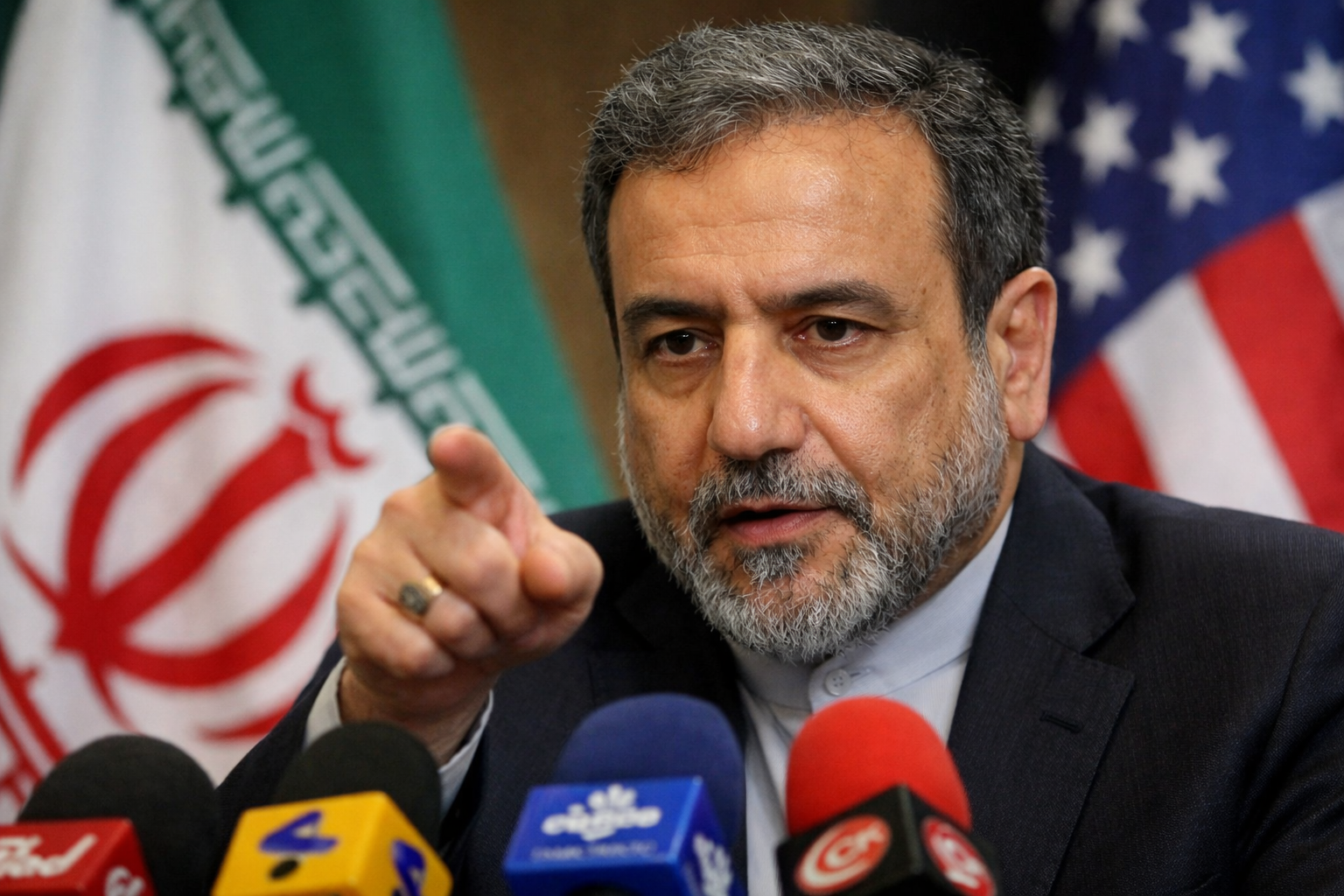
When Abbas Araghchi speaks about negotiations with the United States, he does not sound like a diplomat eager for a breakthrough. He sounds like one prepared to wait.
That mindset came through clearly in his recent remark that Iran’s power lies in its ability to say “no.” The comment carried no theatrical edge and no emotional appeal. Its impact came from restraint — and from confidence.
That restraint is precisely what likely unsettled Washington.
In conventional diplomacy, refusal often signals failure. Negotiations are expected to advance. Compromises are meant to accumulate. Progress is typically measured in rounds completed and statements issued. Iran does not operate by that standard, and it has not for years.
A Long-Standing Position, Not a Sudden Shift
Observers sometimes treat Iranian statements as abrupt escalations. In reality, this position reflects continuity rather than change.
From Tehran’s perspective, sustained pressure has not produced the outcomes external powers anticipated. Sanctions damaged the economy and strained daily life. Ordinary citizens bore the burden. Yet the state endured. Political institutions held. Core policies remained intact.
That record informs Iran’s current posture.
Araghchi’s emphasis on refusal does not aim to provoke. It explains how Iran interprets its own survival.
Why Refusal Carries Strategic Weight
Iranian officials regularly argue that once a country shows vulnerability to pressure, demands multiply. They express this belief publicly and without hesitation.
In their assessment, compromise without firm guarantees results in permanent loss. Once concessions are made, recovery proves difficult. Pressure, by contrast, rarely ends. It simply changes form.
This thinking shapes Iran’s negotiating behavior. Talks proceed slowly. Deadlines carry little authority. Urgency draws skepticism.
Araghchi’s remarks align with that strategy. Refusal extends timelines, preserves leverage, and forces counterparts to clarify priorities.
The Nuclear Dispute Beyond Technical Terms
Western governments often frame the dispute around enrichment thresholds, inspection access, and compliance mechanisms. Iran acknowledges these technical factors but views the issue more broadly.
Tehran links nuclear capability — including civilian use — to sovereignty. Leaders interpret demands to dismantle that capability under pressure as submission rather than cooperation.
That perception holds strong domestic resonance.
Even Iranian figures who favor engagement with the West rarely argue for abandoning the program solely to ease negotiations. Within Iran’s political landscape, Araghchi’s position falls well inside the mainstream.
Why the Moment Matters
Araghchi’s timing reflects calculation.
Negotiations remain open but stalled. Regional tensions persist. Military signaling continues. Political uncertainty in Washington complicates diplomatic planning.
Iran detects hesitation across the table and senses urgency as well — driven by energy markets, regional stability concerns, and electoral cycles. By speaking firmly now, Tehran establishes expectations early.
It signals patience, not retreat.
Domestic considerations reinforce that stance. Iranian leaders face ongoing economic strain and cannot appear publicly flexible. Strong language offers insulation against internal criticism.
Messaging by Design, Not Disorder
Differences in tone among Iranian officials often prompt speculation about internal division. One voice emphasizes fairness. Another draws firm limits.
This is not inconsistency. It is design.
Iran routinely communicates through layered messaging. One channel reassures negotiators that talks remain possible. Another underscores red lines. Together, they preserve room to maneuver without signaling weakness.
Araghchi’s role is to articulate boundaries clearly.
How Washington Is Likely to Interpret the Signal
For U.S. policymakers, this approach frustrates established assumptions. Pressure is expected to alter behavior. Sanctions are meant to compel adjustment. Deadlines are supposed to matter.
Iran challenges all three.
Still, American officials recognize the pattern. Tehran often opens negotiations with firm positions and adjusts only after it perceives security in its core interests.
The risk lies in misinterpretation. If Washington treats refusal as final, talks could end prematurely. If Iran assumes eventual U.S. concession, miscalculation becomes possible.
For now, both sides appear content to wait.
Regional Consequences Extend Beyond Bilateral Talks
Iran’s posture affects more than its relationship with Washington. Regional governments, allies, and rivals track these signals closely.
Prolonged stalemate heightens tension but reduces the likelihood of sudden escalation. Iran appears comfortable operating in that space — neither fully reconciled nor openly confrontational.
That comfort reflects strategy, not indecision.
The Message Beneath the Rhetoric
Stripped of emphasis and reaction, Araghchi’s message remains straightforward.
Iran will engage, but on its own timeline.
It will negotiate, but without urgency.
Compromise will come only when Tehran sees balance.
In Iran’s assessment, strength does not emerge from hurried agreements or public gestures. It comes from the credible willingness to walk away.
Whether this approach produces progress or prolongs stalemate remains uncertain. What is clear is that Tehran sees no reason to change course.
For now, refusal remains a tool — and Abbas Araghchi continues to use it deliberately.