
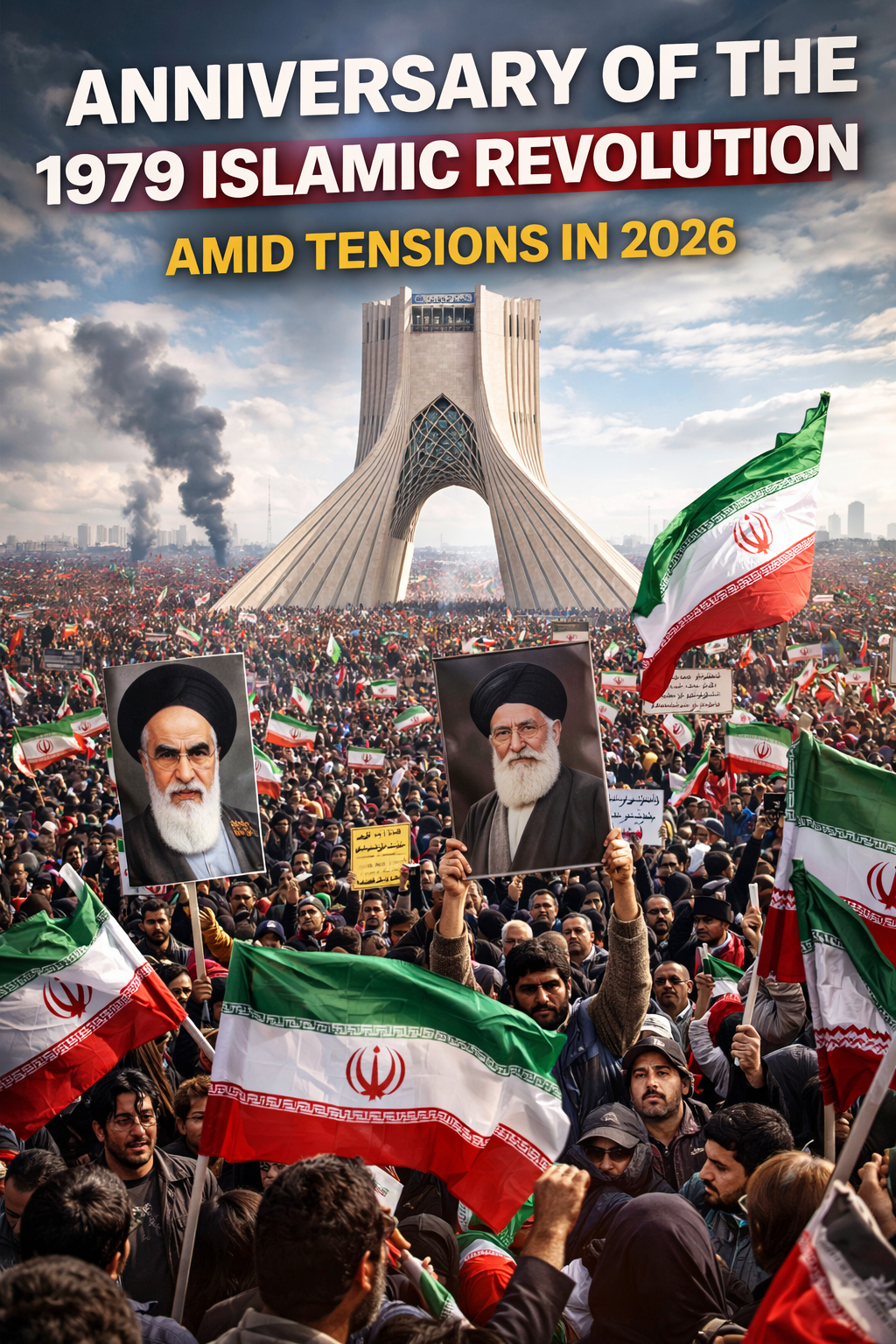
Every year on February 11, Iran marks the anniversary of the 1979 revolution that reshaped the country’s history. Streets fill with flags. Loudspeakers echo with revolutionary songs. Leaders give speeches that talk about resistance, independence, and national pride.
But this year felt different.
As the Islamic Republic commemorated the revolution that toppled the Shah in 1979, the atmosphere carried more weight than celebration. The 47th anniversary unfolded at a time when Iran finds itself balancing internal pressure and rising geopolitical tensions. The symbolism was strong. The message was clear. Yet beneath the official slogans, the mood was layered and complicated.
A Revolution That Changed Everything
The 1979 Islamic Revolution removed Mohammad Reza Shah Pahlavi from power and brought Ayatollah Ruhollah Khomeini to the forefront. What followed was the birth of the Islamic Republic — a political system unlike most others in the region.
For supporters of the revolution, it represents independence from Western influence and a reclaiming of national identity. For critics, it marked the beginning of strict political and social controls that still define the country.
That dual narrative still exists today.
When crowds gathered in Tehran and other major cities this week, state media framed the day as proof that the revolution remains alive and strong. Officials spoke about resilience in the face of sanctions and foreign pressure. Chants of “Death to America” and “Death to Israel” echoed through organized rallies, as they often do during such commemorations.
Yet outside the staged unity, Iran’s political and economic realities tell a more complex story.
Geopolitical Pressure Is Back in Focus
Tensions between Iran and the United States have once again intensified. Talks over Iran’s nuclear program remain fragile. Sanctions continue to weigh heavily on the economy. Meanwhile, Washington has increased its military posture in the region, sending signals that it is closely watching Tehran’s next moves.
For Iranian leaders, the anniversary became an opportunity to send their own message back. Speeches emphasized sovereignty. Officials insisted that Iran would not bow to external pressure. They framed sanctions as tools of intimidation and painted resistance as a national duty.
In public rhetoric, the revolution is often presented as unfinished business — a struggle that continues not just against past monarchy, but against modern geopolitical rivalry.
Domestic Challenges Add Another Layer
While foreign policy headlines dominate international coverage, many ordinary Iranians are more focused on everyday struggles. Inflation has been tough. Jobs are uncertain. Young people openly debate the country’s direction on social media.
Recent years have also seen waves of protests sparked by economic hardship and political dissatisfaction. Though the anniversary rallies projected unity, the government remains aware of simmering frustration.
In some cities, security presence appeared tighter than usual. Officials wanted the day to pass without disruption. They aimed to show stability at home while projecting strength abroad.
And in fairness, many people did attend rallies willingly. For some, the revolution is deeply personal. Families remember where they were in 1979. They speak of change, sacrifice, and hope.
That generational divide is striking. Older citizens often speak about the revolution with emotion. Younger Iranians, born decades later, measure it against present-day realities.
Nuclear Talks Hover in the Background
Another shadow hanging over the anniversary was the ongoing nuclear discussion.
Iran insists its nuclear program is peaceful. Western governments remain skeptical. Negotiations have come and gone over the years, sometimes advancing, often collapsing.
During anniversary speeches, leaders hinted that talks are possible — but not at any cost. They stressed that dignity and national interest come first.
That line plays well domestically. It ties back directly to the revolutionary narrative of standing firm against outside interference.
Still, global markets and regional governments watch these statements closely. Any shift in nuclear talks affects oil prices, diplomatic alignments, and military calculations.
Regional Tensions Complicate Matters
Iran’s role in the Middle East also adds tension to the picture. From Syria to Lebanon to the Gulf, Tehran’s alliances and rivalries shape regional dynamics.
Countries like Israel remain vocal critics of Iran’s policies. Gulf states maintain cautious relationships. Meanwhile, international powers calculate their strategies carefully.
So when Iran marks the revolution, it is not simply a national holiday. It becomes a stage for political messaging. Every speech, every banner, every slogan carries diplomatic weight.
Symbolism of Azadi
The anniversary rallies traditionally center around Azadi Square in Tehran. The Azadi Tower itself has become a symbol of both the old and new Iran. Built during the monarchy, it now stands as a backdrop to revolutionary celebrations.
There is something poetic about that.
A monument from one era now frames the slogans of another. History layered on top of history.
As crowds gathered this week, the tower stood unchanged. Around it, chants and speeches filled the air. Above it, geopolitical tensions quietly hovered.
The Human Reality
It’s easy to look at Iran through a purely strategic lens — sanctions, nuclear talks, military positioning. But at the heart of the anniversary are ordinary people.
Shopkeepers closed stores early to join marches. Families walked together holding small flags. Teenagers filmed the rallies on their phones. Some joined with pride. Others observed quietly.
Life continued.
Taxi drivers talked about fuel prices. Students debated politics over tea. Business owners wondered what new sanctions might mean for imports.
For them, the revolution’s anniversary isn’t just history. It intersects with rent, jobs, and opportunity.
A Moment of Reflection
Forty-seven years is a long time in politics. Few revolutions maintain their original energy for decades. Yet Iran’s leadership continues to draw legitimacy from 1979.
This year’s anniversary showed both confidence and caution. Confidence in public messaging. Caution in security presence. Pride in history. Concern about the future.
As the day ended and crowds dispersed, Tehran returned to its usual rhythm. Traffic filled the streets. Cafés reopened. Conversations shifted from speeches to daily routines.
But the bigger questions remain.
Can Iran navigate rising geopolitical tension without escalation?
Will nuclear negotiations find stable ground?
How will domestic pressures shape the next decade?
The anniversary did not answer those questions.
What it did show is that the legacy of 1979 still defines Iran’s political identity — especially when the world feels uncertain.
And perhaps that is the real takeaway from this year’s commemoration: the revolution is not just something Iran remembers.
It is something Iran continues to negotiate — both with the world and within itself.