
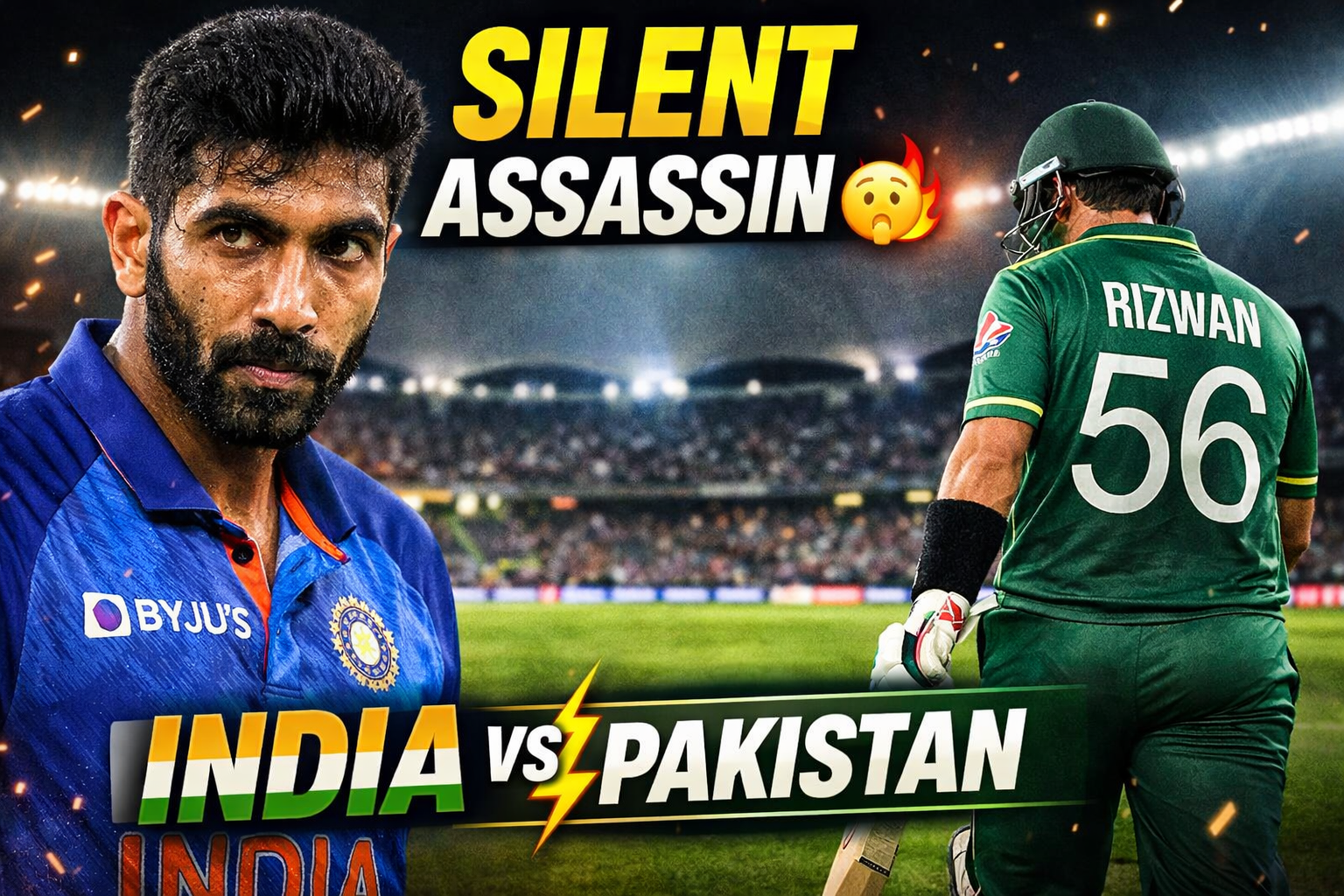
India vs Pakistan matches usually belong to the loudest moments — big sixes, wild celebrations, chest-thumping intensity. But this one felt different.
This time, the story wasn’t about noise.
It was about control.
While fans waited for fireworks, one Indian bowler quietly stepped in and changed the game without making it look dramatic. No animated gestures. No aggressive send-offs. Just over after over of pure discipline.
By the time Pakistan realized what was happening, the chase had already started slipping away.
A Spell That Didn’t Look Dangerous — Until It Was
The strange thing about spells like this is that they don’t feel dramatic in real time.
There was no single explosive moment. No instant collapse. Nothing that made you jump from your seat.
Instead, it was a slow squeeze.
Dot balls started piling up. Boundaries became rare. Singles suddenly felt like small victories. And gradually, the required run rate began creeping upward.
You could sense the tension building, even if nothing spectacular was happening on screen.
Control Over Chaos
What made this spell stand out wasn’t raw pace or mystery deliveries. It was control.
Every ball seemed thought out. Hard lengths, tight lines, clever angles. No unnecessary experimentation. No desperation.
In high-pressure chases, that kind of bowling feels suffocating for batters. They aren’t blown away — they’re boxed in.
And once that feeling settles in, mistakes usually follow.
Pakistan Didn’t Collapse. They Tightened Up.
Looking back at the scorecard might suggest a collapse. But it didn’t feel like one while watching.
Pakistan weren’t swinging wildly. They weren’t throwing wickets away. If anything, they looked cautious.
And that was the problem.
The more careful they became, the more the pressure grew. Shots stopped flowing. Gaps became harder to find. Even routine singles felt risky.
It wasn’t destruction. It was strangulation.
The Wicket That Changed Everything
Every chase has a moment where belief either grows or fades.
Here, it faded quietly.
A mistimed shot. A simple catch. No dramatic celebration, no roaring send-off. Just a calm walk back and a quiet acknowledgement from teammates.
But if you watched closely, you could see the shift.
Body language dipped. Urgency crept in. The chase suddenly looked heavier than it had a few overs earlier.
That’s when you knew the game had tilted.
India’s New Look Under Pressure
There’s something noticeable about this Indian side in big tournaments now — they look calmer.
Earlier teams sometimes rode emotion too hard. This version feels more balanced. More measured.
They don’t chase moments anymore. They build them.
And spells like this reflect that mindset. No theatrics. Just execution.
Win the small phases, and the match follows.
The Silent Assassin Effect
Some players dominate with personality. Others dominate with numbers.
And then there are players like this — the quiet match-winners.
They don’t demand attention. They don’t create noise. But they sit right in the middle of turning points.
You don’t notice them constantly during the game. But once it’s over, you realize they were everywhere that mattered.
That’s what makes them dangerous.
Pakistan’s Chase Slipped, Not Shattered
This wasn’t a dramatic last-over heartbreak. It felt more like a slow fade.
The required rate kept climbing. Fielders got sharper. Voices from the Indian side grew louder.
Meanwhile, Pakistan looked stuck between caution and urgency — never fully committing to either.
And somewhere in that in-between space, the match slipped away.
Not with a bang. Just a quiet drift.
No Wild Celebrations, Just Quiet Respect
Even after the win, there wasn’t an over-the-top reaction.
Teammates walked up, nodded, and moved on. Almost like they already knew who had done the real damage.
Sometimes, dressing-room respect says more than any celebration.
And this felt like one of those moments.
Final Thought
India vs Pakistan clashes are usually remembered for towering sixes and dramatic finishes. But every now and then, a different kind of hero emerges.
Not the loud one.
Not the flashy one.
The quiet one.
The player who walks in, executes perfectly, and walks away while the pressure does the talking.
No drama. Just damage.
And in matches like these, that’s often the most dangerous weapon of all.