
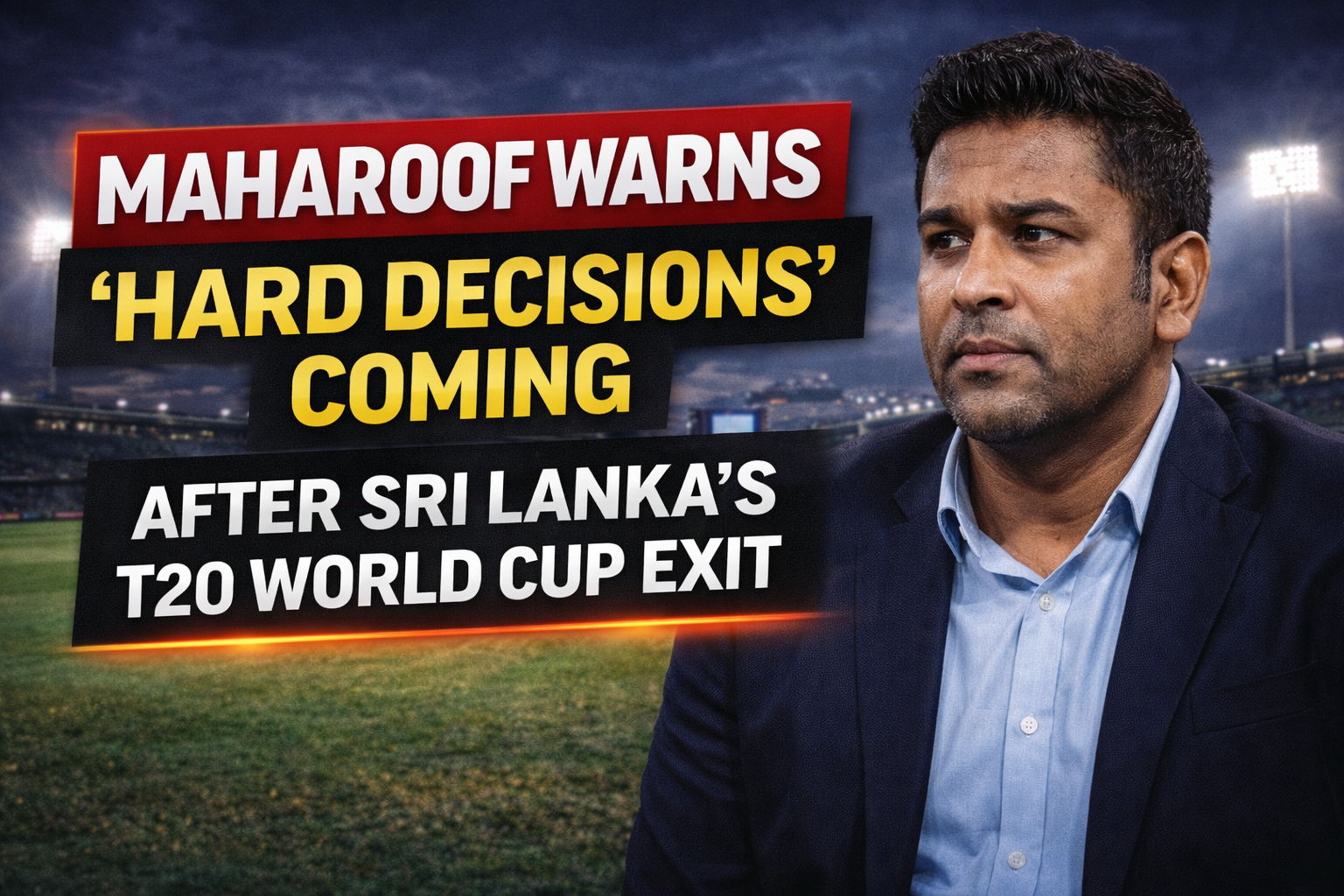
Sri Lanka’s T20 World Cup journey didn’t end with chaos. There was no one dramatic collapse or shocking last-ball heartbreak. Instead, it faded quietly — the kind of exit that hurts in a different way.
By the time elimination became official, it almost felt inevitable.
And that’s why Farveez Maharoof’s reaction stood out. Not because it was loud, but because it was calm. Honest. Direct.
His message was simple: Sri Lanka now has to make some hard decisions.
A Tournament That Never Found Rhythm
From the start, something felt slightly off about Sri Lanka’s campaign. Not disastrous, but unsettled. The team never really clicked at the same time.
Some games showed promise with the ball. Others had moments with the bat. But complete performances were rare.
In short tournaments, that’s usually fatal. You don’t get time to build momentum slowly. You either find rhythm quickly — or you run out of matches.
Sri Lanka ran out of matches.
Why Maharoof’s Words Matter
Maharoof isn’t known for dramatic reactions. That’s what made his comments land harder.
He didn’t blame individuals. He didn’t point fingers. Instead, he hinted at something deeper — structure, direction, clarity.
When former players talk like that, they’re usually thinking beyond one tournament. They’re thinking about patterns.
And Sri Lanka have seen this pattern before: flashes of promise, followed by early exits.
What ‘Hard Decisions’ Really Means
In cricket, phrases like that are rarely accidental.
It could mean reviewing senior players. It could mean fast-tracking youngsters. It might even involve leadership conversations.
Or maybe all of the above.
Sri Lanka have been in a transition phase for years now. Some experienced names are gone, but the next generation hasn’t fully settled into defined roles.
That in-between phase is tricky. Teams often look competitive but not convincing — exactly how Sri Lanka looked in this World Cup.
Batting Still Feels Stuck in Between Eras
One recurring issue was intent. Modern T20 batting has evolved rapidly, but Sri Lanka sometimes looked unsure which version to follow.
There were overs where they seemed to pause — not attacking, not rebuilding, just drifting.
That hesitation can be costly today. Teams that hesitate fall behind quickly.
Maharoof didn’t spell it out, but his tone suggested that mindset shifts might be as important as personnel changes.
Not Everything Was Negative
It would be unfair to say there were no positives. The bowling unit had moments where it looked sharp. There were spells that reminded fans of Sri Lanka’s traditional strength with the ball.
But T20 cricket rarely rewards isolated good moments. You need sustained pressure, and Sri Lanka struggled to maintain that across full matches.
Small lapses kept turning into big consequences.
A Possible Reset Moment
Every cricketing nation faces phases like this. The tricky part is recognizing when small adjustments aren’t enough.
Maharoof’s words felt like a quiet acknowledgment of that reality.
Sometimes teams need a reset. Not panic. Not chaos. Just clarity.
That could mean picking a direction and sticking with it, even if short-term results fluctuate.
Fans Know This Feeling
Sri Lankan fans have lived through cycles before. They’ve seen golden generations rise and fade. They’ve also seen rebuilds that took longer than expected.
So the reactions after this exit were mixed — disappointment, yes, but also realism.
Many fans aren’t shocked. They’re just waiting to see what comes next.
The Bigger Question Now
The real challenge for Sri Lanka isn’t the defeat itself. It’s what follows.
Do they double down on gradual changes? Or do they embrace a bolder rebuild?
Do they lean into youth immediately? Or keep blending experience carefully?
Those are the decisions Maharoof’s comments quietly point toward.
Where Sri Lanka Stand
Right now, Sri Lanka feel like a team between chapters. Not broken, but not fully rebuilt. Capable, but inconsistent.
That middle space can last longer than expected if direction isn’t clear.
And that’s why moments like this matter. Not because of the loss itself — but because of what it forces teams to confront.
The Takeaway
Maharoof didn’t offer a blueprint. He didn’t name players. He didn’t demand instant change.
But his message was unmistakable.
Sri Lanka can’t treat this exit as just another bad tournament. It has to be a turning point.
Because in cricket, painful exits often become the starting point of something new — if teams are brave enough to act on them.