
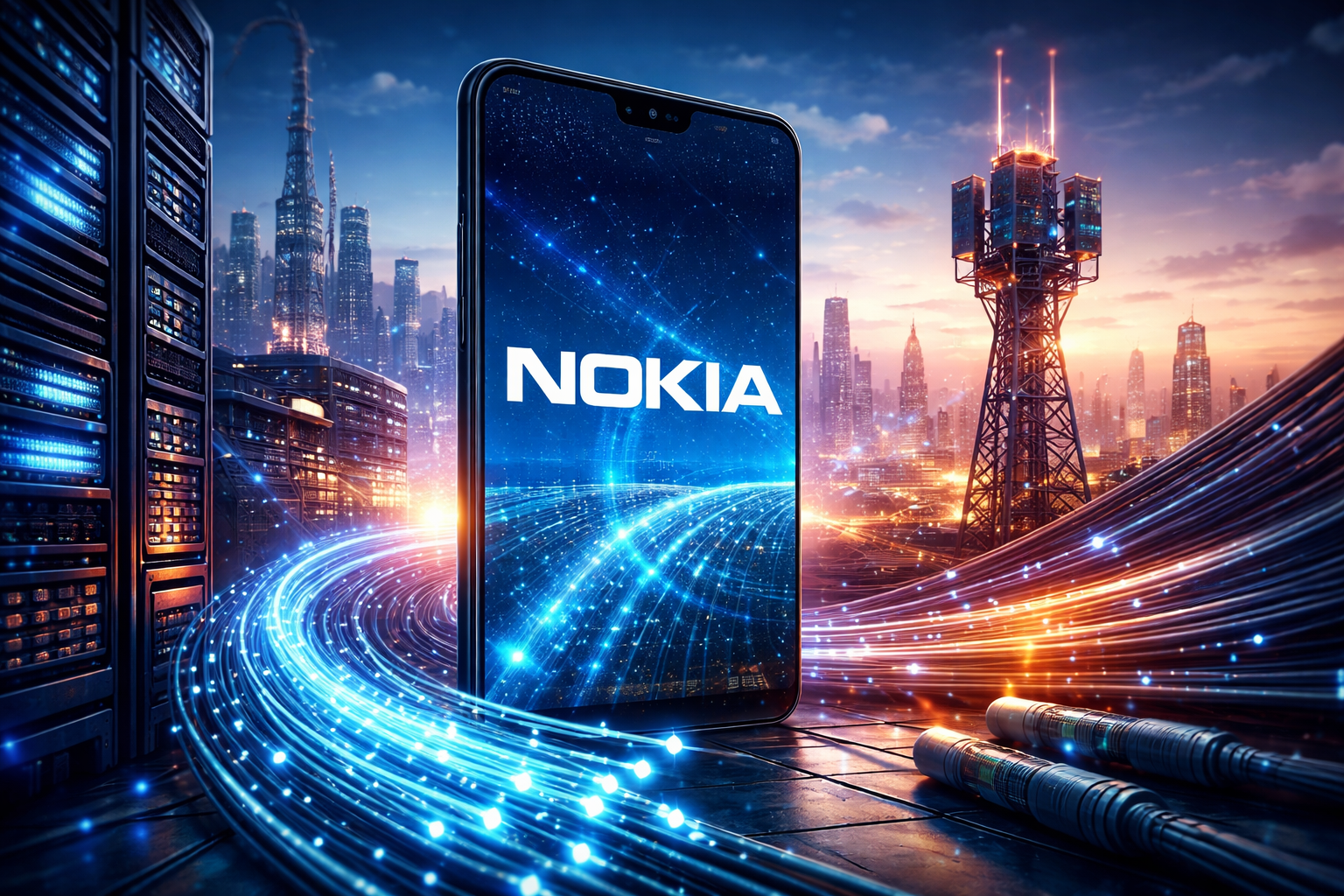
Nokia’s Quiet Tech Comeback: From Tough Phones to the Backbone of Modern Networks
If you used a mobile phone in the early 2000s, chances are you owned a Nokia. Or at least someone close to you did. Those devices had a reputation: solid, simple, and almost impossible to break.
People used to joke that if you dropped a Nokia, the floor would crack before the phone did.
At that time, Nokia wasn’t just another handset maker competing in a crowded market. It was the mobile market. Walk into any electronics shop and rows of Nokia devices would greet you.
Then the smartphone era arrived — and suddenly the company that once dominated global mobile sales seemed to disappear from the spotlight.
But Nokia didn’t vanish. It simply changed direction.
Today, the company plays a very different role in the technology world. Instead of chasing smartphone headlines, Nokia works behind the scenes building the networks that carry the world’s data.
And in many ways, its influence may now be bigger than when it sold phones.
When Nokia Stopped Making Phones
The turning point came when Nokia sold its phone business to Microsoft. At the time, many observers saw it as the end of an era.
For Nokia itself, however, the sale opened a different path.
Rather than continuing to compete in the increasingly brutal smartphone market, the company doubled down on telecommunications technology. That meant focusing on the infrastructure that powers mobile and internet connectivity worldwide.
In simple terms, Nokia began building the systems that allow phones — no matter the brand — to connect to networks.
Those systems include technologies such as:
- 5G radio access equipment
- Fiber broadband infrastructure
- Cloud-based telecom platforms
- High-capacity optical networks
Most people never see this equipment. Yet it forms the invisible architecture that keeps digital communication running.
The Global 5G Expansion
Over the last few years, the rollout of 5G networks has accelerated across many countries.
For telecom providers, upgrading infrastructure is expensive but necessary. Faster data speeds and higher demand for streaming, gaming, and cloud services require networks that can handle enormous traffic loads.
That’s where companies like Nokia come in.
Network vendors supply the hardware and software telecom operators rely on to build these systems. The competition is intense, with several global firms fighting for contracts, but the opportunity is massive.
As mobile data consumption grows each year, the need for stronger and more efficient networks grows with it.
Why India Matters
India has become one of the most important markets for telecom infrastructure.
The country’s digital transformation has been rapid. Affordable data plans and expanding smartphone use have brought millions of people online over the past decade.
For telecom providers, that growth creates both opportunity and pressure. Networks must constantly expand to handle rising demand.
Nokia has responded by increasing its investment in India, including expanding research and development work in Chennai.
The facility focuses on technologies such as advanced broadband systems, wireless innovations, and network automation.
Beyond serving the local market, the center also contributes to global telecom research. In that sense, India has become more than a sales destination — it’s part of Nokia’s innovation pipeline.
AI Enters the Telecom Network
Another major shift happening in the telecom industry involves artificial intelligence.
Modern networks generate huge amounts of operational data. Monitoring traffic flows, diagnosing problems, and adjusting performance used to require extensive manual oversight.
Now, AI systems are increasingly being used to manage those tasks.
By analyzing network behavior in real time, AI can identify congestion, reroute traffic, and predict potential failures before they occur.
Nokia has been developing what it calls AI-RAN, technology that integrates artificial intelligence directly into radio access networks.
The concept is straightforward: smarter networks that manage themselves more efficiently.
For telecom operators dealing with millions of connected devices, that level of automation could be transformative.
The Long View: 6G
While the world continues building out 5G infrastructure, researchers are already looking ahead to the next stage.
That next step will likely be 6G.
Commercial deployment may still be years away, but early work has already begun in labs and research centers.
The ambitions are ambitious. Engineers talk about extremely low latency, dramatically faster wireless speeds, and entirely new communication possibilities.
Some early ideas even involve holographic communication and advanced immersive digital environments.
Whether those visions fully materialize remains to be seen. But companies involved in early research stand to shape how future networks evolve.
Nokia is among the firms hoping to play that role.
Nokia Phones Haven’t Disappeared
Despite the company’s shift toward infrastructure, the Nokia phone brand still exists in the consumer market.
Today, those devices are produced by HMD Global, which licenses the Nokia name.
The phones themselves tend to focus on practicality. Long battery life, durable designs, and relatively clean Android software remain key selling points.
They may not dominate the premium smartphone category, but they still appeal to users who prefer simple, dependable devices.
Reinventing an Icon
Few technology companies survive losing the market they once dominated.
Nokia managed to do exactly that.
Instead of fading away after its mobile phone era ended, the company rebuilt itself around telecommunications infrastructure — an industry that continues to expand as digital connectivity becomes more essential.
Today Nokia operates less as a consumer electronics brand and more as a quiet architect of global communication systems.
Most people rarely think about the companies that keep mobile networks running. But those systems are the foundation of modern digital life.
And increasingly, Nokia is one of the companies helping build that foundation.