
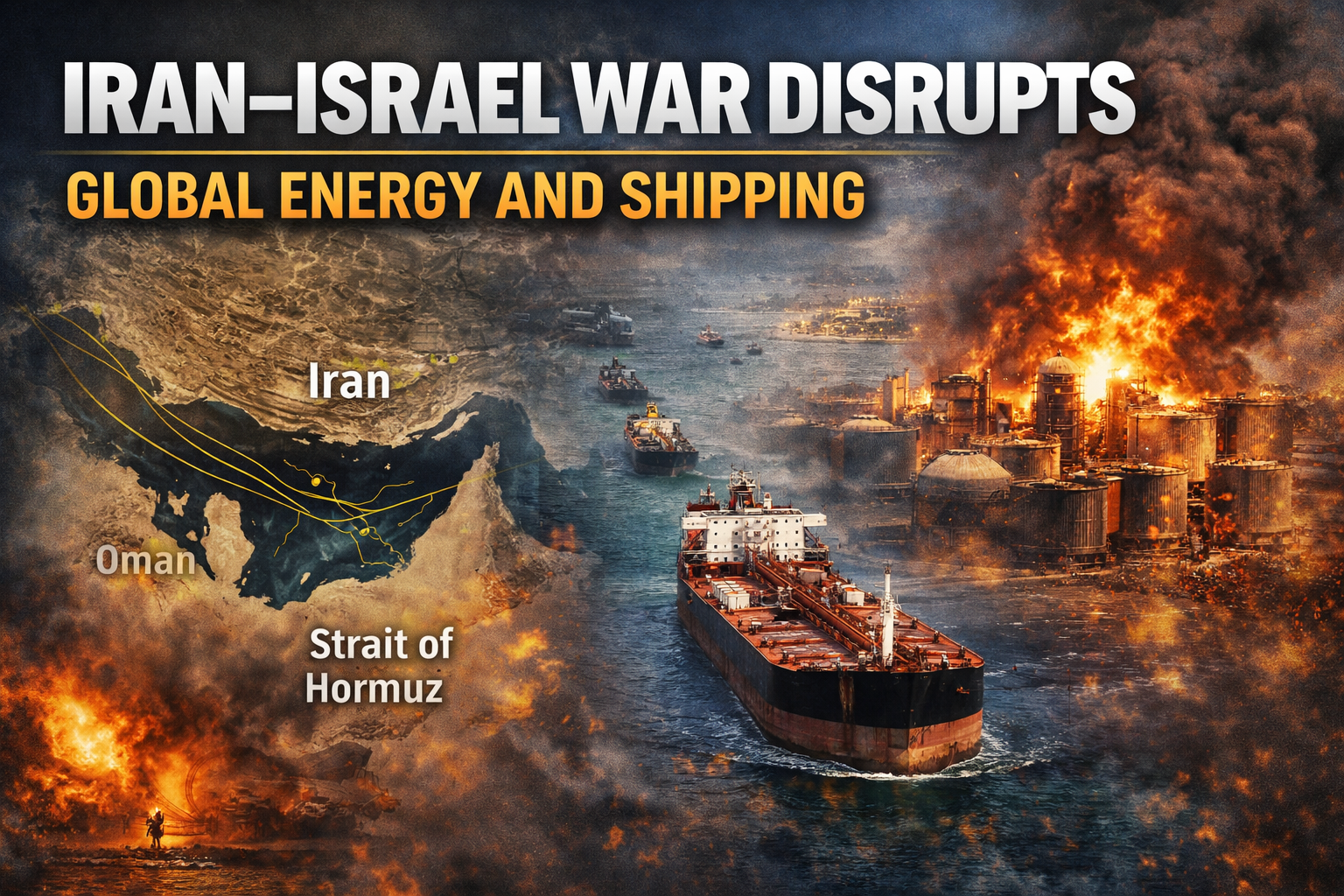
The ongoing conflict between Israel and Iran is no longer just a regional security issue. It is quickly becoming a global economic crisis, disrupting oil shipments, shipping routes, and energy markets worldwide.
As missile strikes and military operations intensify across the Middle East, one strategic location has become the center of global concern: the Strait of Hormuz. This narrow waterway connects the Persian Gulf to the Arabian Sea and carries roughly 20% of the world’s oil and liquefied natural gas supply.
When tensions rise in this region, the ripple effects are felt across global energy markets almost immediately.
Shipping Through Hormuz Nearly Stops
Since the conflict escalated, shipping traffic through the Strait of Hormuz has dropped dramatically. Normally, more than a hundred ships pass through the strait every day, carrying crude oil and natural gas from Gulf producers to markets in Asia, Europe, and North America.
But recent military strikes and retaliatory attacks have made the route extremely dangerous.
Iran has launched drones and missiles at vessels and warned some ships not to enter the waterway. As a result, many shipping companies have suspended operations or diverted vessels to avoid the area.
Some tankers are now anchored outside the strait, waiting for security guarantees before continuing their journeys.
Oil Prices Surge Worldwide
The disruption to shipping has already triggered a spike in global energy prices. Oil traders reacted quickly as supplies from the Gulf region began to tighten.
In the weeks since the conflict intensified, Brent crude prices have climbed sharply, crossing the $100-per-barrel mark at one stage.
Energy analysts warn that prolonged disruptions could push prices even higher, potentially reaching levels not seen in years. Banks and financial institutions have already raised their forecasts for oil prices due to uncertainty surrounding the conflict.
Higher oil prices quickly translate into more expensive fuel, electricity, and transportation costs around the world.
Energy Facilities Under Threat
The conflict has also affected key energy infrastructure across the region. Several oil terminals, ports, and energy facilities have come under attack or been forced to shut down temporarily.
For example, drone strikes reportedly targeted Fujairah Port in the United Arab Emirates, one of the world’s major oil storage and export hubs. The port lies just outside the Strait of Hormuz and plays a critical role in global energy supply chains.
Energy companies are now increasing security measures around refineries and export terminals, while governments are preparing contingency plans in case the conflict spreads further.
Impact on Global Trade
The disruption goes beyond oil. Shipping companies are also worried about the safety of commercial cargo vessels traveling through the region.
Insurance premiums for ships entering the Persian Gulf have surged, while freight costs for oil tankers have reached record levels. Some shipping routes linking Asia, Europe, and the Middle East are now facing delays and rerouting.
These changes could affect global supply chains, especially for countries that rely heavily on imported energy.
Why the Strait of Hormuz Matters
The importance of the Strait of Hormuz cannot be overstated. Countries such as Saudi Arabia, Iraq, Kuwait, Qatar, and the United Arab Emirates depend on this narrow passage to export their oil and gas.
If the strait remains partially blocked or dangerous for shipping, millions of barrels of oil per day could be removed from the global market.
Some experts have even warned that the disruption could become one of the largest supply shocks in modern energy history, surpassing previous crises.
That possibility has raised fears of a global economic slowdown if energy costs remain high for an extended period.
Asia and Europe Feel the Pressure
The countries most vulnerable to the disruption are large energy importers in Asia and Europe. Nations like India, China, Japan, and South Korea rely heavily on Middle Eastern oil transported through the Strait of Hormuz.
A prolonged disruption could lead to higher fuel costs, inflation, and slower economic growth across these regions.
For India in particular, the crisis carries special importance. A large portion of India’s crude oil imports comes from Gulf nations, making the stability of shipping routes in the region crucial for its energy security.
Global Efforts to Keep Shipping Safe
International powers are now considering steps to keep shipping lanes open. Some countries have proposed deploying naval escorts to protect commercial vessels traveling through the Gulf.
Diplomatic efforts are also underway to reduce tensions between the conflicting sides and prevent further attacks on energy infrastructure.
However, analysts warn that restoring normal shipping operations may take time even if the fighting slows down.
A Conflict With Worldwide Consequences
The Israel–Iran confrontation shows how quickly regional conflicts can reshape global markets. Energy prices, shipping routes, and international trade are all being affected by events thousands of kilometers away from most consumers.
For now, the world is watching the Strait of Hormuz closely. As long as tensions remain high in the Middle East, the global economy will continue to feel the shockwaves of the conflict.