
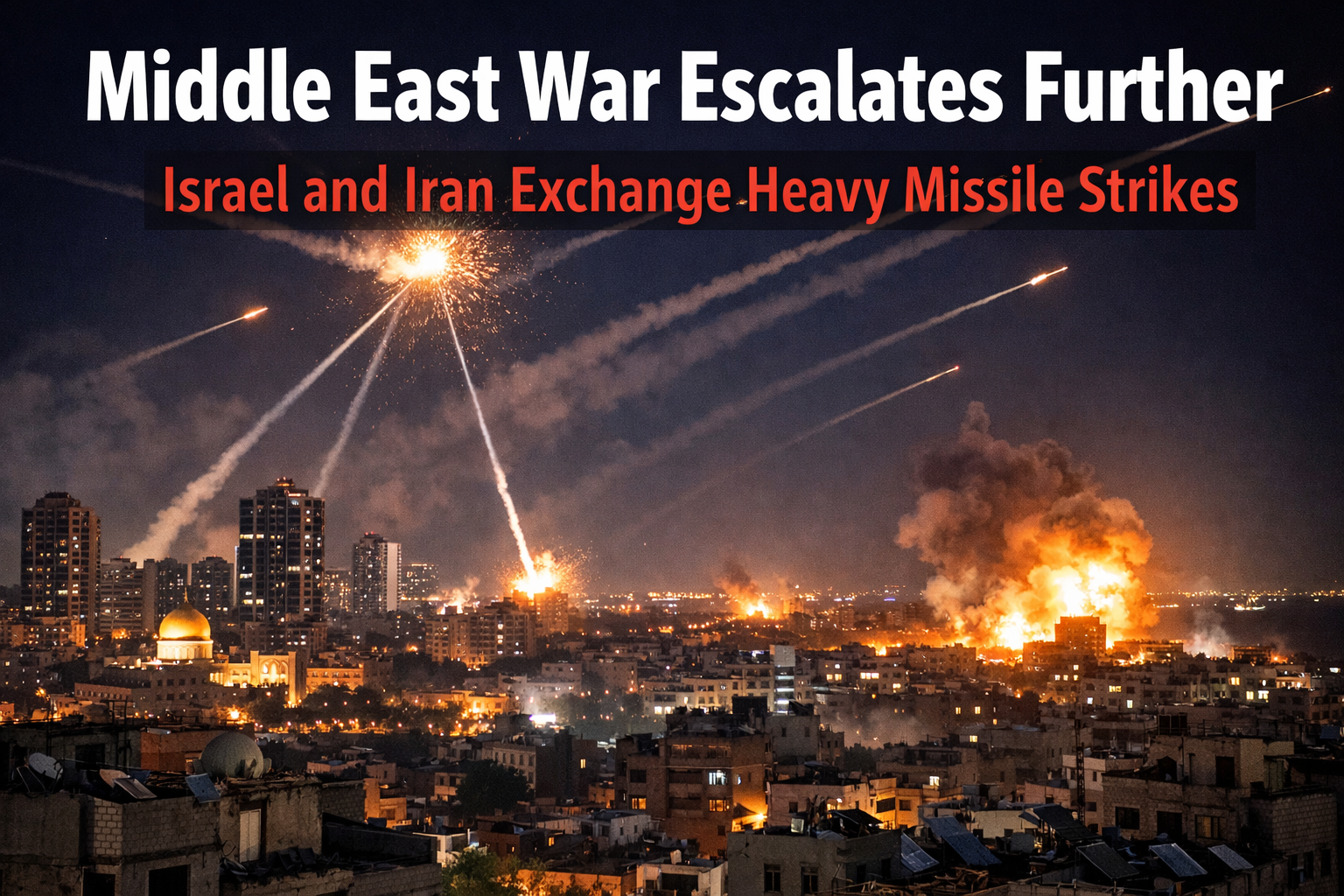
The Middle East is once again at the center of global attention, but this time the situation feels heavier, more unpredictable, and far more dangerous than before.
Over the past few days, tensions between Israel and Iran have sharply escalated, turning what was once a shadow conflict into something much more visible — and much more explosive. Missile strikes, air defense interceptions, and retaliatory attacks have become almost routine headlines. Yet behind those headlines lies a deeper concern: this conflict is no longer contained.
It is spreading.
A Conflict That Refuses to Stay Local
What makes the current situation particularly alarming is how quickly it has expanded beyond a direct Israel–Iran confrontation. Armed groups across the region — from Lebanon to Iraq — have become increasingly active. That means this is no longer a two-sided conflict. It is evolving into a multi-front crisis.
Residents in several cities have reported nights filled with sirens and skies lit up by interception systems. For many, sleep has become uncertain. Life continues, but cautiously — always with one eye on the sky.
At the same time, reports suggest that critical infrastructure, including energy facilities and strategic locations, may be potential targets. That raises the stakes significantly. When infrastructure becomes part of the battlefield, the ripple effects reach far beyond borders.
The Strait of Hormuz: A Global Pressure Point
Perhaps the most worrying development is the growing tension around the Strait of Hormuz, one of the most important oil transit routes in the world. Nearly a fifth of global oil supply passes through this narrow stretch of water.
Even the slightest disruption here sends shockwaves through global markets.
And that’s exactly what we are beginning to see.
Oil prices have started climbing again, reacting not just to actual disruptions but also to fear. In global markets, perception can be as powerful as reality. Traders are already pricing in risk — the risk of blocked shipments, delayed tankers, and potential military confrontations at sea.
For countries heavily dependent on imported fuel, this could quickly translate into higher fuel prices, increased inflation, and pressure on everyday life.
The U.S. and Global Powers Step In — Carefully
The United States has issued strong warnings, signaling that any major disruption to international shipping routes would not go unanswered. However, there is also clear hesitation.
No major power wants to be pulled into a full-scale war in the region.
European nations, along with key Asian economies, are walking a diplomatic tightrope. On one side is the need to protect economic interests and energy supplies. On the other is the risk of escalation if they intervene too directly.
This balancing act is becoming harder by the day.
Civilian Impact: The Human Side of War
While political leaders exchange warnings and strategies, it is civilians who carry the real burden.
Families are adjusting to uncertain routines. Businesses are slowing down. Schools in some areas have shifted schedules or closed temporarily. Hospitals remain on alert.
The fear isn’t just about immediate danger — it’s about what comes next.
Will this escalate further?
Will more countries get involved?
How long will this last?
These questions don’t have clear answers yet.
A War That Could Shape the Global Economy
Beyond the region, the economic consequences are already beginning to surface.
Higher oil prices could lead to increased transportation costs worldwide. That, in turn, affects food prices, manufacturing, and daily essentials. In simple terms, a conflict thousands of kilometers away can still impact what people pay at the petrol pump or grocery store.
There is also concern in industries that rely on stable supply chains. Shipping delays or insurance risks in conflict zones can disrupt global trade flows. The longer the tension continues, the deeper the economic impact becomes.
What Happens Next?
Right now, the situation remains fluid.
Diplomatic efforts are ongoing behind the scenes. Messages are being sent, negotiations are being explored, and backchannel talks are likely happening. But on the ground, the reality still looks tense.
Military activity has not slowed. If anything, it has intensified.
That leaves the world in a waiting phase — watching closely, hoping for de-escalation, but preparing for the possibility that things could get worse before they get better.