
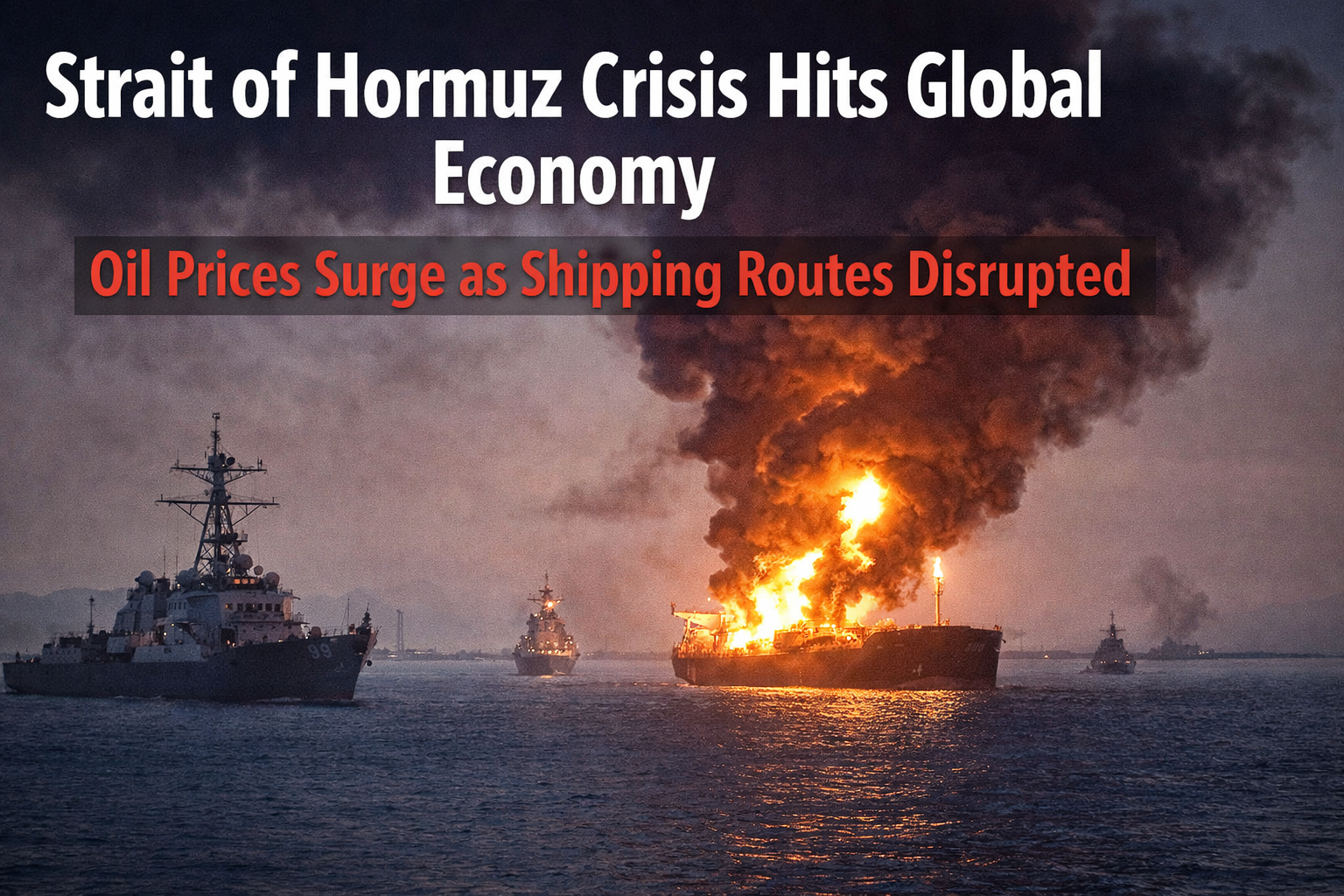
The world doesn’t often notice the Strait of Hormuz — at least not until something goes wrong.
Now, something has.
Over the past few days, rising tensions in the Middle East have turned this narrow stretch of water into one of the most closely watched locations on the planet. The Strait of Hormuz may look small on a map, but in reality, it carries a massive responsibility: nearly 20% of the world’s oil supply passes through it.
And right now, that flow is under threat.
A Chokepoint Under Pressure
The Strait of Hormuz connects the Persian Gulf to the open ocean. It’s one of the busiest and most strategically important shipping routes in the world. Oil tankers pass through it every day, carrying energy supplies from countries like Saudi Arabia, Iraq, and the UAE to markets across Asia, Europe, and beyond.
But with the ongoing conflict involving Iran and Israel, the situation in and around the strait has become tense.
There are growing reports of increased military presence, warnings to commercial vessels, and fears of possible disruptions. Even without a full blockade, the uncertainty alone is enough to shake global markets.
Because when it comes to oil, stability matters just as much as supply.
Oil Prices React — Fast
Markets don’t wait for confirmation. They react to risk.
As soon as concerns around the Strait of Hormuz began to rise, oil prices started climbing. Traders, investors, and governments all know what’s at stake. If shipping through the strait slows down — or worse, stops — the impact would be immediate.
Fuel prices at petrol stations could rise. Transportation costs could increase. Airlines, shipping companies, and manufacturers would all feel the pressure.
And that’s just the beginning.
For countries that rely heavily on imported energy, this could quickly turn into a serious economic challenge. Inflation, which many economies are already struggling with, could climb again.
A Ripple Effect Across the World
The consequences of this crisis don’t stay in the Middle East.
They travel.
Higher oil prices affect everything — from the cost of food to the price of everyday goods. When transportation becomes expensive, businesses pass those costs on to consumers. That means households around the world could soon start feeling the impact.
In developing countries, the situation can be even more difficult. Governments may be forced to increase fuel prices or reduce subsidies, putting additional pressure on citizens.
Meanwhile, industries that depend on stable supply chains are already preparing for possible disruptions. Delays in shipping routes or increased insurance costs for vessels traveling through high-risk zones can slow down global trade.
Military Tensions Add to Uncertainty
What makes the situation more complicated is the growing military activity in the region.
Naval forces from multiple countries are increasing their presence near the Strait of Hormuz. While this is meant to ensure the safety of shipping routes, it also raises the risk of confrontation.
In such a crowded and tense environment, even a small incident can escalate quickly.
That’s what worries analysts the most — not just what is happening now, but what could happen next.
Diplomatic Efforts — Quiet but Crucial
Behind the scenes, diplomatic efforts are underway.
Countries that depend heavily on oil imports are closely monitoring the situation and pushing for stability. There are ongoing discussions, backchannel communications, and attempts to prevent the situation from spiraling further.
But diplomacy takes time.
And markets move faster.
That gap between political response and market reaction is where uncertainty grows.
Why This Moment Matters
The Strait of Hormuz has always been important, but moments like this remind the world just how critical it really is.
This isn’t just about oil. It’s about global stability.
A disruption here doesn’t stay local. It spreads — through economies, through industries, and into everyday life.
That’s why governments, businesses, and even ordinary people are paying close attention.
What to Watch Next
For now, the situation remains uncertain.
Key questions remain unanswered:
- Will shipping continue without disruption?
- Will tensions ease or escalate further?
- Will global powers step in more directly?
The answers to these questions will shape not just the next few days, but possibly the next few months.
📊 Final Take
The Strait of Hormuz crisis is a reminder of how interconnected the world has become.
A narrow waterway in the Middle East now holds the power to influence fuel prices, economic stability, and global trade.
And as tensions continue, the world watches — closely, cautiously, and with growing concern.