
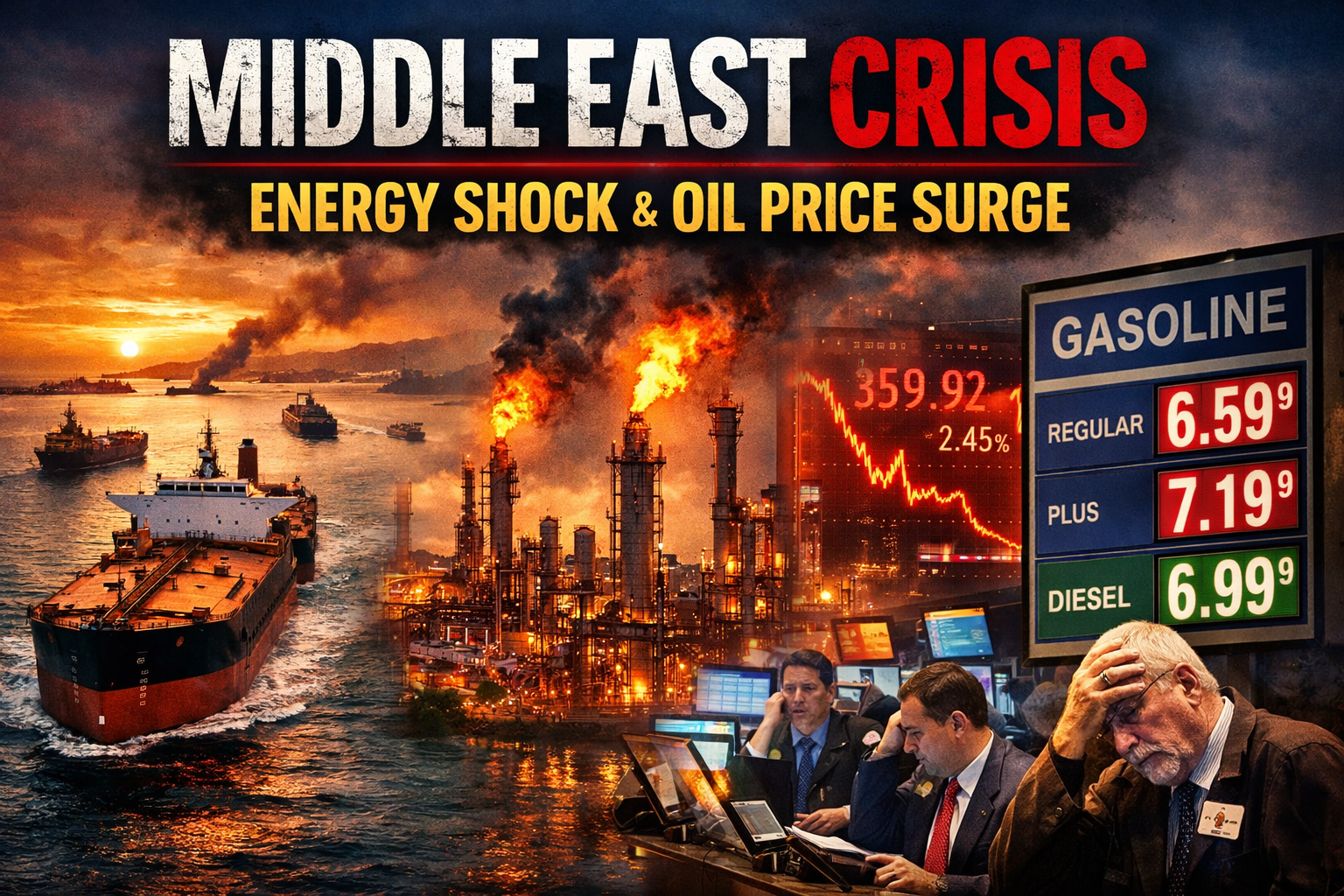
You don’t usually think about a place like the Strait of Hormuz when you fill petrol or order food online. It feels far away — somewhere on a map most people never look at.
But right now, that tiny stretch of water is quietly affecting the entire world.
Over the last few days, tensions in the Middle East have picked up again. Nothing has fully exploded, but nothing feels calm either. It’s that uneasy middle zone — where everyone is watching, waiting, and reacting.
And markets hate that kind of uncertainty.
The Strait of Hormuz matters because a huge chunk of the world’s oil moves through it. Not a small amount — a massive one. When there’s even a hint that ships might slow down or reroute, traders react instantly.
That’s already happening.
Oil prices have started climbing again. Not because supply has completely stopped — but because people are worried it might. And in the oil market, fear alone can move prices faster than actual shortages.
Once oil goes up, everything else slowly follows.
You might first notice it at a petrol pump. Prices creep up a little. Then transport costs increase. Delivery charges go up. After that, food prices begin to shift. It doesn’t happen overnight, but it doesn’t take long either.
It’s like a domino effect — one push, and the rest follows.
At the same time, stock markets across the world have been shaky. Some days they fall sharply, then recover a bit, then fall again. That kind of movement usually means one thing: nobody is confident about what happens next.
Investors are playing safe. Money is moving away from risky bets into safer places. That’s not panic yet — but it’s definitely caution.
And when big money becomes cautious, it often signals trouble ahead.
What makes this situation tricky is that nothing is clear.
There are reports, warnings, military signals — but no single event you can point to and say, “That’s it.” Instead, it’s a build-up. A slow increase in pressure.
Those situations can go either way. They calm down quietly, or they suddenly escalate.
Right now, both options are on the table.
Some experts have started comparing this to older oil shocks — the kind that hit the global economy decades ago. Back then, prices surged, inflation went wild, and daily life became more expensive almost everywhere.
Today, the world is more prepared on paper. Countries have reserves. Supply chains are broader.
But there’s a catch — demand is also much higher now.
So even a small disruption can still hit hard.
And the timing isn’t great either. The global economy hasn’t been completely stable anyway. There’s already pressure from inflation, interest rates, and other geopolitical tensions.
This just adds another layer.
On the ground in the Middle East, things remain tense but controlled — at least for now. There are movements, warnings, positioning. Enough to keep everyone alert, but not enough to fully spiral.
That “almost calm, almost crisis” phase is often the hardest to read.
One strong move in either direction can change everything.
There have been brief moments where things seemed to cool down — talks, signals, pauses. Each time that happens, markets respond quickly. Oil dips a little. Stocks recover slightly.
But the relief never lasts long.
Because the bigger question is still hanging in the air — what happens next?
For everyday people, the impact won’t come as breaking news alerts. It will show up slowly.
Fuel gets a bit more expensive. Groceries cost a little more. Travel becomes slightly pricier. Monthly budgets start feeling tighter.
Not dramatic at first — just noticeable enough.
In countries like India, where oil imports play a big role, this effect tends to show up faster. Governments may step in, adjust taxes, or try to balance things out. But even then, some pressure always passes through.
That’s just how it works.
The next few weeks are important.
If tensions ease, things could stabilize. Prices may settle. Markets might regain confidence.
But if something triggers a bigger escalation — especially anything that disrupts shipping through the Strait — the impact could be much stronger.
Right now, the world is in a waiting phase.
Watching. Reacting. Adjusting.
No one knows exactly how this plays out.
But one thing is clear — what’s happening in that narrow stretch of water isn’t staying there.
It’s already moving outward… into markets, into economies, and slowly, into everyday life.