
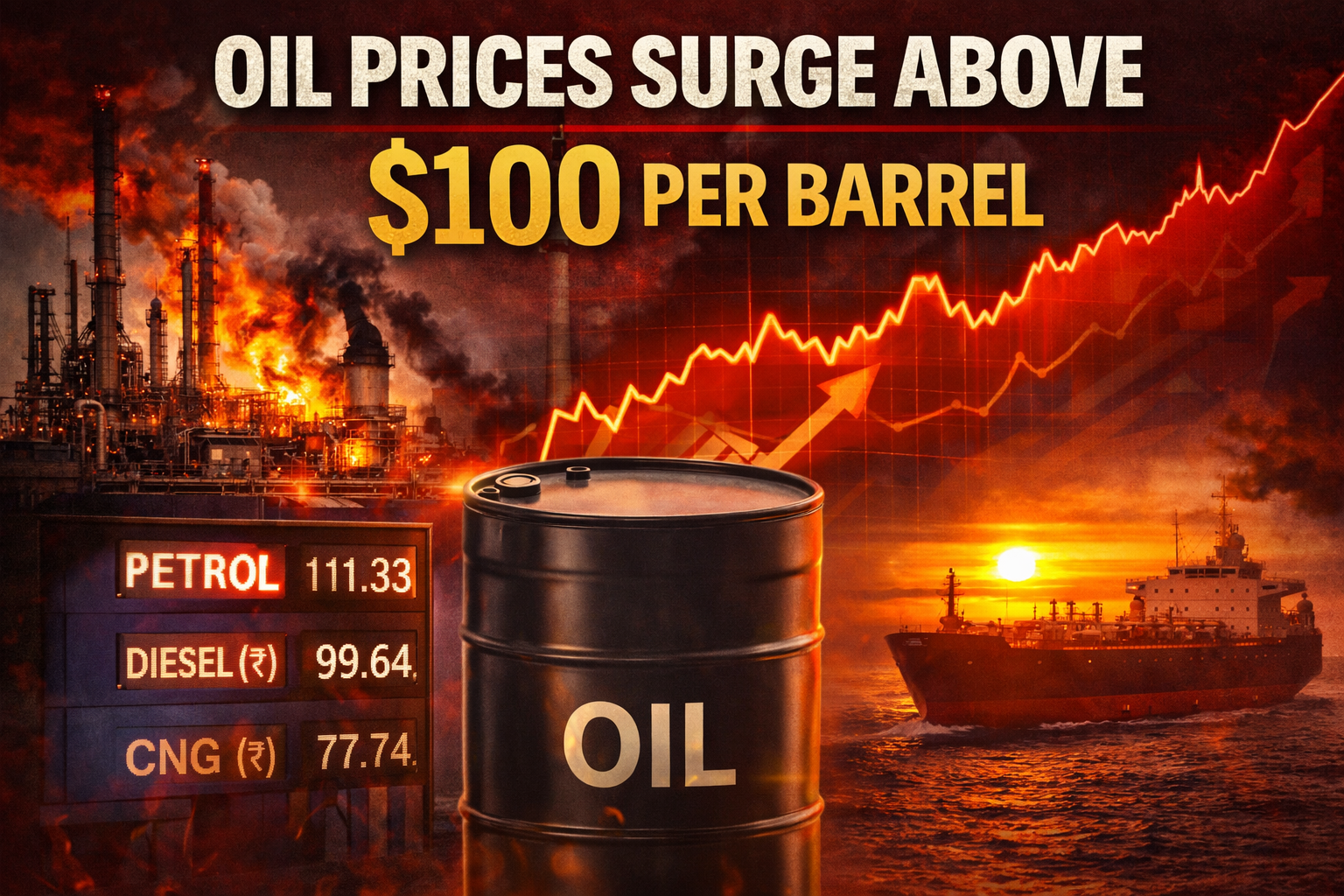
You don’t really notice it at first.
There’s no sudden shock. No one big headline that says “this is it.” It’s more like… small changes that start adding up. A few rupees more at the fuel station. Delivery times stretching a bit. News updates that feel routine, but keep repeating the same theme.
Something isn’t quite steady.
The tension between Israel and Iran is part of it, obviously. But the effect isn’t staying there. It’s leaking into systems that run quietly in the background — shipping routes, fuel supply, trade flow.
That’s where it starts to matter.
People keep bringing up the Strait of Hormuz, and honestly, it makes sense. It’s one of those places most of us never think about unless there’s a problem. But a big chunk of the world’s oil moves through that narrow stretch.
Normally, it’s just… constant movement. Tankers in, tankers out.
Right now, it’s not that smooth.
There are delays. Slight ones, but enough to be noticed. Shipping companies aren’t exactly stopping, but they’re not moving as freely either. Routes are being adjusted here and there. Costs are creeping up — insurance, security, everything around the journey.
Nothing dramatic on its own.
But together? It slows things down.
And once supply slows, even a little, the reaction starts elsewhere.
Oil prices have been moving, but not in a clean direction. Up one day, down the next, then up again. It feels less like a trend and more like hesitation. Markets aren’t sure what to believe yet.
That uncertainty — that’s doing a lot of the work.
For a country like India, it doesn’t stay abstract for long. We import a large share of our oil, so even small shifts outside can show up here. Not instantly. But give it some time, and you start seeing it — in fuel costs, in transport, in everyday prices that don’t always seem connected at first.
You end up paying a little more, without always knowing why.
And it’s not just oil.
Gas markets are also feeling a bit tight. Some countries are trying to secure extra supply early, just in case. That creates a kind of quiet competition. Nothing aggressive — just everyone trying to stay ahead.
That, too, pushes prices.
Governments are watching all this, but they’re not reacting loudly. Not yet.
The G7 countries are having their discussions — backup plans, reserve usage, coordination. It sounds technical, and it is. But the idea is simple: be ready before things get worse.
The United Nations has said the usual things about stability and caution. Which is fair. At this stage, no one wants to overreact.
Because, technically, nothing has broken.
That’s the strange part.
Everything is still working. Ships are still moving. Oil is still flowing. Markets are still open.
But it doesn’t feel stable.
It feels… tight.
Like something is being stretched, slowly.
You can sense it in small decisions. Businesses holding back just a little. Transport companies adjusting rates quietly. Even households thinking twice before spending.
Not out of panic.
Just caution.
There’s also this constant background thought — what if this goes further?
What if the situation spreads?
What if shipping gets restricted more seriously?
No clear answers. Just possibilities.
And sometimes, possibilities are enough to change behaviour.
Still, it could settle. That’s the other side of it. If tensions ease — even a bit — things might return to normal faster than expected. Supply chains tend to recover quickly when pressure drops.
We’ve seen that before.
But right now, that easing hasn’t happened.
So things stay where they are — not collapsing, not calming.
Just… holding.
And that’s probably the hardest phase to read. Because nothing looks urgent on the surface. But underneath, there’s movement.
Slow, steady pressure.
And you only really notice it once it’s been building for a while.