
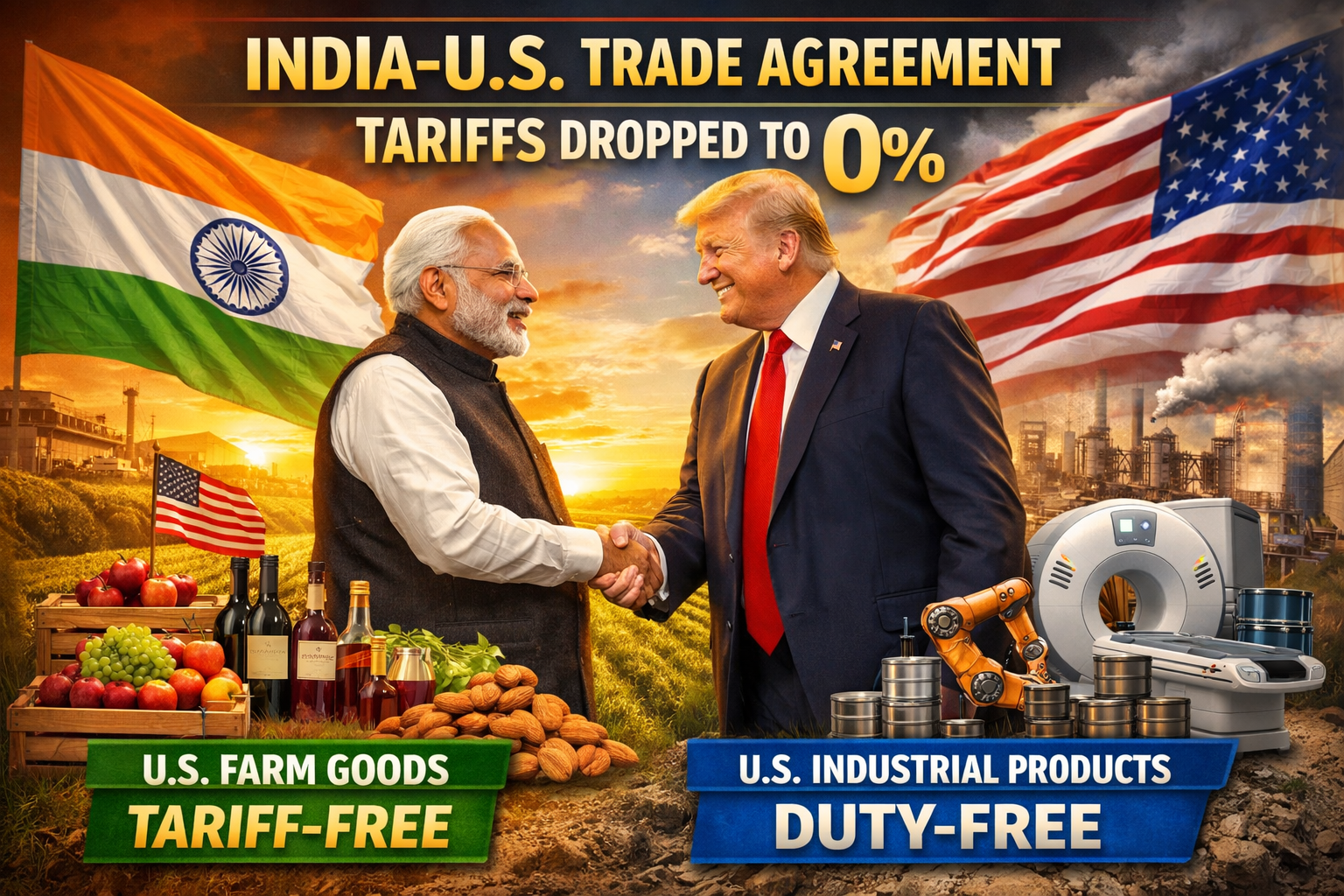
When the U.S. Trade Representative publicly stated that India has agreed to lower tariffs to zero on a wide range of American industrial and agricultural goods, it immediately caught attention on both sides of the globe. On the surface, it sounds dramatic — almost like India is throwing open its markets overnight. But as with most big trade announcements, the reality is more layered, more political, and far more strategic.
According to USTR Jamieson Greer, the proposed deal would give American exporters unprecedented access to one of the world’s fastest-growing consumer markets. From industrial chemicals and medical devices to select agricultural products such as fruits, nuts, wine, and spirits, tariffs that once made U.S. goods expensive in India could soon disappear.
For the United States, this is being framed as a major win. For India, it is being presented as a carefully balanced compromise — one that opens doors without sacrificing domestic priorities.
Why This Announcement Matters Now
Trade relations between India and the United States have often swung between cooperation and tension. Over the years, disputes over tariffs, market access, and protection of domestic industries have been common. What makes this announcement different is its scale and timing.
Global supply chains are being reshaped. Countries are trying to reduce overdependence on any single partner, especially amid geopolitical uncertainty. For India, strengthening trade ties with the U.S. fits into a broader strategy of diversification and global integration. For Washington, deeper access to India’s market offers long-term economic and strategic benefits.
Still, the phrase “zero tariffs” deserves careful interpretation.
Zero Tariffs — But Not on Everything
One key point often lost in headlines is that India is not eliminating tariffs across the board. While the U.S. Trade Representative spoke of a “vast array” of goods, Indian officials have been quick to clarify that sensitive agricultural sectors remain protected.
This distinction is crucial.
India’s agriculture sector supports hundreds of millions of livelihoods. Any sudden, full-scale opening could destabilize rural incomes and food security. That is why products such as dairy, certain grains, and politically sensitive crops are likely to remain shielded by tariffs or non-tariff barriers.
In other words, this is not a surrender — it’s a selective opening.
What the U.S. Gains from the Deal
From the American perspective, the benefits are tangible:
- Industrial exports like machinery, chemicals, and medical equipment become more competitive in India.
- Agri-exporters gain better access to Indian consumers, especially in premium segments.
- U.S. companies reduce dependence on slower-growing Western markets.
- Strategically, the U.S. strengthens economic ties with a key Indo-Pacific partner.
For American farmers and manufacturers facing domestic pressure, this deal offers a rare piece of good news.
What India Gets in Return
India’s gains may be less headline-grabbing but are equally significant.
First, the U.S. has indicated it will lower tariffs on Indian goods, easing pressure on exporters in sectors such as textiles, engineering goods, and specialty manufacturing. Second, the agreement is tied to broader cooperation, including energy imports, aircraft purchases, and defense collaboration.
Equally important is what India avoids. By negotiating carefully, it preserves policy space for small farmers, MSMEs, and strategic industries — a recurring concern in past trade talks.
The Political Angle Behind the Agreement
Trade deals are never just about economics. They are also about political signaling.
For the U.S., highlighting zero tariffs helps project toughness and success on the global stage. For India, the messaging focuses on protecting national interests while still engaging with the world. Both narratives can coexist — and often do — in diplomacy.
This explains why American statements emphasize openness, while Indian statements stress safeguards. Neither side is necessarily contradicting the other; they are simply speaking to different audiences.
Will Consumers in India Feel the Impact?
If implemented as described, Indian consumers could see lower prices or more choice in certain imported goods, particularly premium food products, medical devices, and industrial inputs. However, this will not translate into an overnight flood of cheap American goods.
Logistics, standards, local competition, and consumer preferences still play major roles. Tariffs are just one piece of the puzzle.
Risks and Unanswered Questions
Despite the optimism, several questions remain unanswered:
- Which exact products will qualify for zero tariffs?
- How quickly will the changes be implemented?
- Will non-tariff barriers offset tariff reductions?
- How will domestic producers adapt?
Until official documents are released, much of the discussion rests on political statements rather than legal commitments.
The Bigger Picture
Seen in isolation, the announcement sounds bold. Seen in context, it reflects a gradual recalibration of India–US trade relations rather than a dramatic rupture with past policy.
India is signaling that it is open for business — but on its own terms. The United States is signaling that India matters more than ever in its global trade strategy.
If both sides manage expectations and implementation carefully, this deal could mark a meaningful step toward a deeper, more balanced economic partnership.
other post: India–US Trade Deal: $500 Billion Promise or Political Optics? What Really Changed After the Trump–Modi Call