
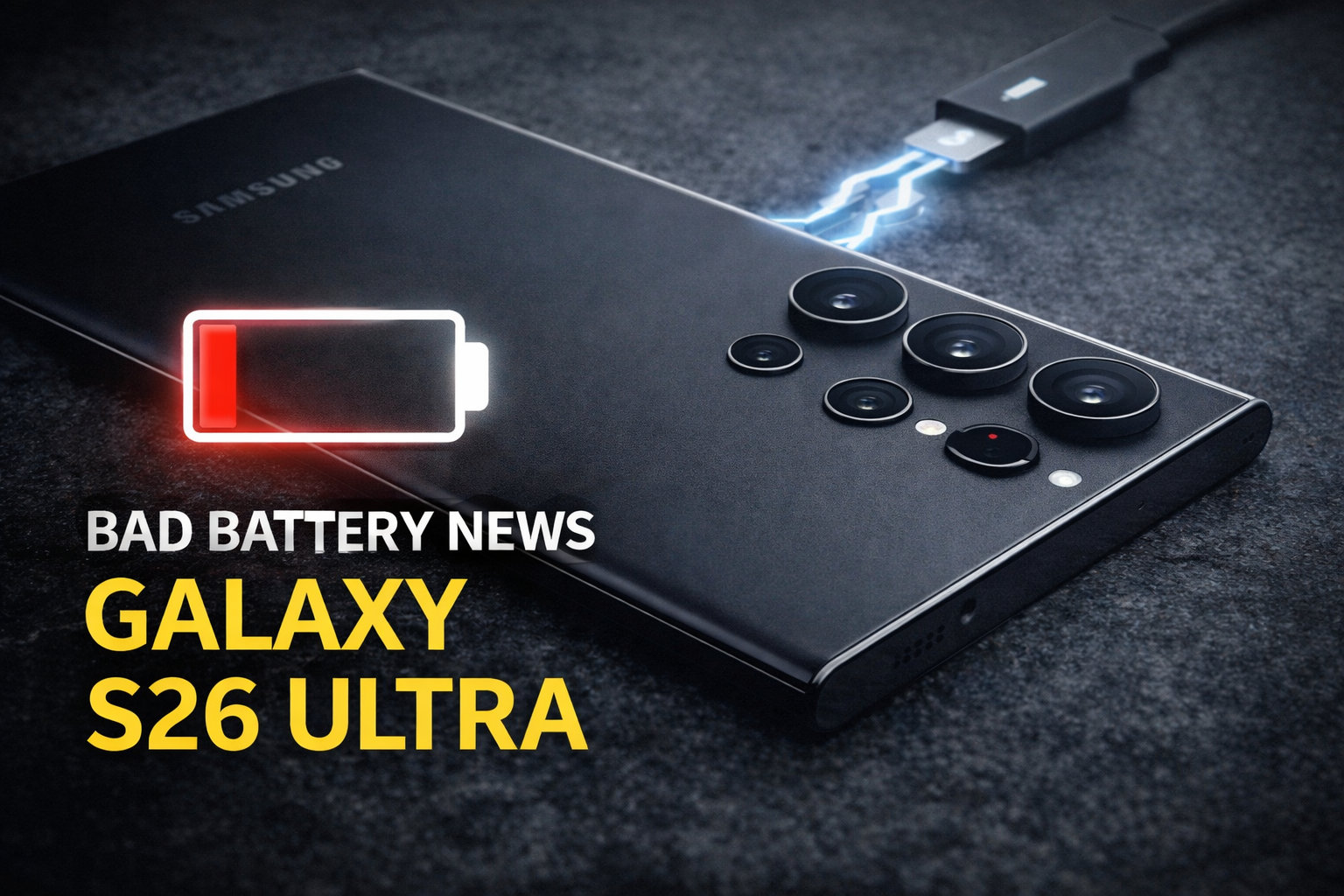
For years, Samsung’s Ultra lineup has represented the very top of Android smartphones — the biggest screen, the best camera hardware, and premium pricing to match. Naturally, expectations are sky-high every time a new Ultra model leaks. But the latest leak surrounding the Samsung Galaxy S26 Ultra has landed with a thud rather than excitement.
According to multiple credible leaks, the Galaxy S26 Ultra is once again expected to ship with a 5,000 mAh battery — the same capacity Samsung has been using for several generations now. In isolation, that number doesn’t sound terrible. But in 2026, with competitors pushing larger batteries and new battery technologies, this news feels like a missed opportunity — or worse, a warning sign.
This isn’t just about numbers on a spec sheet. It’s about how people actually use their phones today — and whether Samsung is still listening to its most loyal users.
Why Battery Life Has Become a Deal-Breaker
Smartphone usage has changed dramatically in the last few years. Phones are no longer just communication tools; they are cameras, wallets, gaming consoles, workstations, and entertainment hubs rolled into one.
People expect:
- All-day battery with heavy use
- Stable performance without overheating
- Confidence that the phone won’t die before evening
When a flagship phone crosses premium pricing territory, users don’t want to think about battery anxiety. They want peace of mind. That’s why this leak feels so frustrating to many long-time Samsung fans.
The Real Problem Isn’t Just Battery Size
On paper, 5,000 mAh still looks decent. But context matters.
The Galaxy S26 Ultra is expected to feature:
- A brighter, more power-hungry display
- A faster flagship chipset
- More AI-driven features running in the background
- Advanced camera processing
All of these things consume power. If the battery size stays the same while power demands increase, real-world battery life may actually get worse — not better.
That’s the fear driving disappointment.
Samsung’s Conservative Approach: Safe or Stubborn?
Samsung is known for playing it safe. While brands like Xiaomi, OnePlus, and Vivo experiment aggressively with new battery tech, Samsung tends to wait until technology is mature and proven at scale.
From Samsung’s perspective, this approach reduces risks:
- Lower chances of battery degradation
- Fewer safety concerns
- Better long-term reliability
But from a consumer perspective, it increasingly feels like playing catch-up rather than leading.
Many users were hoping the Galaxy S26 Ultra would adopt next-generation battery chemistry or at least push capacity beyond the long-standing ceiling. That hope, for now, seems misplaced.
Faster Charging Isn’t the Same as Better Battery Life
Some leaks suggest Samsung may compensate with faster charging speeds. While quicker top-ups are always welcome, they don’t solve the core issue.
Fast charging helps when:
- You’re near a charger
- You can pause for a quick refill
It doesn’t help when:
- You’re traveling
- You’re outdoors for long hours
- You’re relying on the phone for navigation, photography, or work
Battery capacity still matters — and it matters a lot.
Why Fans Are Especially Disappointed This Time
The disappointment around the Galaxy S26 Ultra battery leak feels louder than usual — and for good reason.
Samsung Ultra buyers are not casual users. They are:
- Power users
- Mobile photographers
- Business professionals
- Tech enthusiasts
These are exactly the people who feel battery limitations the most. When such users upgrade to a new Ultra model, they expect tangible improvements — not a sense of déjà vu.
For many, this leak raises an uncomfortable question:
If battery life isn’t improving, what exactly am I upgrading for?
The Bigger Picture: Competition Is Moving Faster
While Samsung appears to be standing still on battery capacity, competitors are moving ahead:
- Larger batteries without increasing thickness
- Smarter power management
- New materials that extend lifespan
This puts pressure on Samsung’s premium positioning. When rivals offer longer endurance at similar or lower prices, loyalty begins to weaken — even among die-hard fans.
Could Software Optimization Save the Day?
To be fair, Samsung has improved significantly in software efficiency. One UI has become more refined, and modern chipsets are more power-efficient than ever.
But software optimization has limits. You can only stretch a battery so far before physics catches up.
If Samsung truly wants to justify keeping the same battery size, it will need to deliver noticeably better real-world endurance, not just promises of efficiency.
What This Means for Buyers
If these leaks turn out to be accurate, buyers should approach the Galaxy S26 Ultra with clear expectations:
Pros
- Likely excellent camera performance
- Premium design and display
- Powerful performance
Cons
- No meaningful battery upgrade
- Potentially similar or worse battery life than previous models
- Less future-proofing for heavy users
For users upgrading from much older phones, the S26 Ultra may still feel like a leap forward. But for recent Ultra owners, the incentive to upgrade looks weaker than ever.
Final Thoughts: A Flagship That Plays It Too Safe?
The Galaxy S26 Ultra battery leak doesn’t make the phone bad — but it does make it less exciting. In a market that rewards innovation and bold decisions, Samsung’s conservative approach risks making its flagship feel predictable.
At this price level, people aren’t just buying a phone. They’re buying confidence, longevity, and the feeling that they own the best.
If Samsung wants the Galaxy S26 Ultra to truly feel “Ultra,” battery life shouldn’t be an afterthought. Because no matter how powerful or beautiful a phone is, it’s only as good as the time it can stay alive in your hand.