
Revised Article
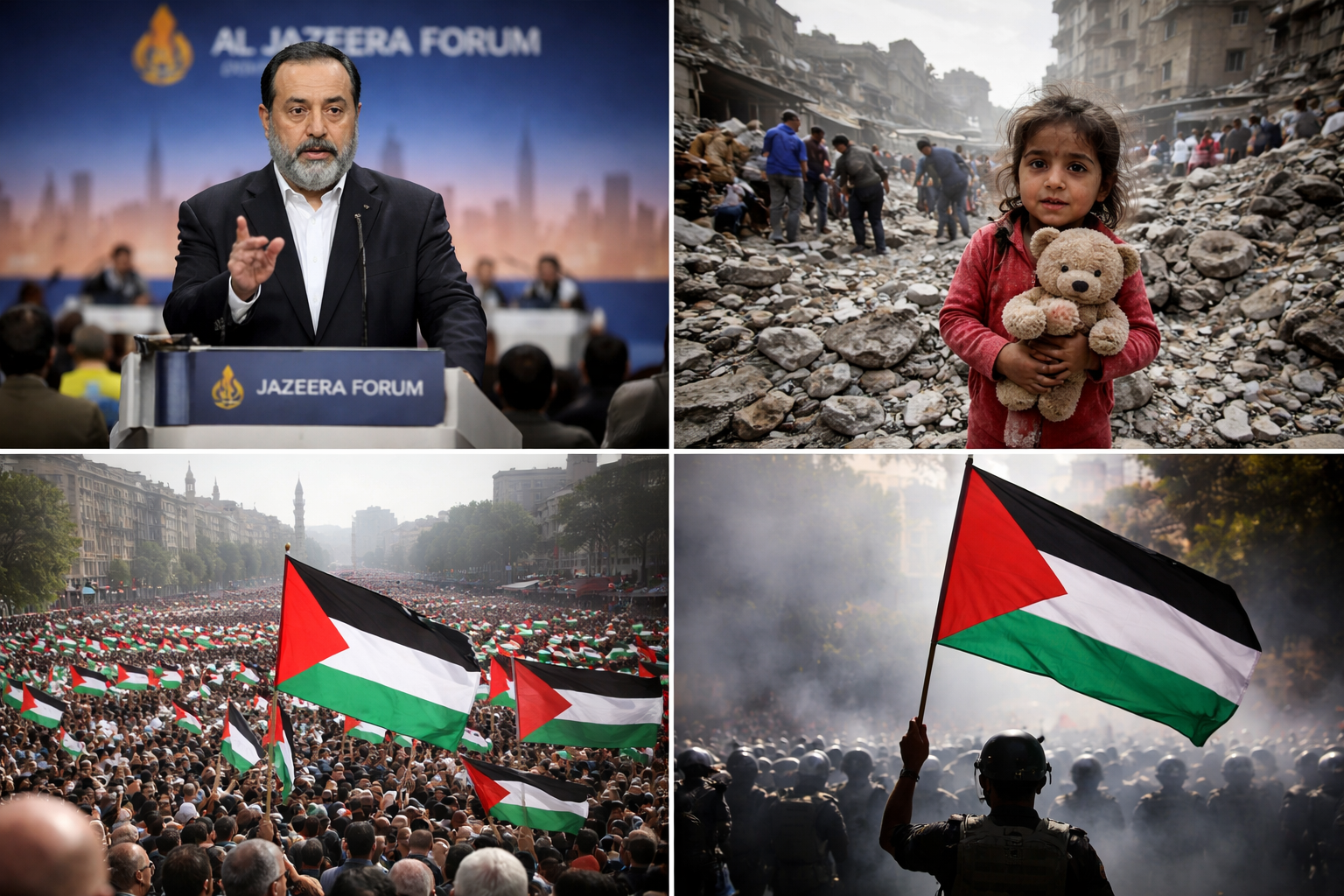
When Iran’s foreign minister described Palestine as the region’s “moral compass” at the Al Jazeera Forum, the remark instantly drew attention across diplomatic and media circles. The phrase was not dramatic by accident. It reflected decades of political frustration, moral positioning, and unresolved conflict that continue to define the Middle East.
Rather than being a passing comment, the statement carried weight because it touched a nerve that still runs deep across the region. Palestine has long stood at the heart of Middle Eastern politics, shaping alliances, public opinion, and perceptions of justice far beyond its borders.
A Meaning That Goes Beyond Diplomacy
Calling something a moral compass implies that it helps distinguish right from wrong. In this context, the Palestinian issue becomes a benchmark — a way to judge whether nations, institutions, and global powers truly stand by the values they claim to defend. The way the world responds to Palestinian suffering often exposes uncomfortable contradictions between principles and practice.
Historically, Palestine has symbolised more than a dispute over land. It represents displacement, occupation, resistance, and the limits of international law. Because of this, reactions to the conflict are rarely neutral. They are emotional, political, and deeply personal for millions.
Why the Al Jazeera Forum Was the Right Stage
The Al Jazeera Forum is a platform known for hosting uncomfortable conversations. Journalists, policymakers, and global thinkers gather there to debate issues that mainstream diplomatic forums often avoid. Statements made at this forum are intended to provoke discussion, not consensus.
By choosing this venue, Iran’s foreign minister ensured that his words reached audiences across the Arab world and the Global South. The forum’s influence amplifies moral language, especially when it aligns with widespread public sentiment.
Human Emotions Behind Political Words
Beyond diplomacy, the statement reflects raw human emotion. Images from Gaza, stories of displacement, and civilian suffering dominate news cycles. Many people watching these events feel a growing sense of injustice when responses from powerful nations appear slow, selective, or cautious.
That emotional gap fuels strong rhetoric. Describing Palestine as a moral compass is another way of asking why some lives generate global outrage while others are reduced to statistics. It forces listeners to confront uncomfortable moral questions rather than hide behind legal language.
Iran’s Long-Standing Position
Iran has consistently framed Palestine as a central issue of justice in the region. This stance has remained unchanged across governments and decades. Supporting the Palestinian cause allows Tehran to present itself as standing against what it sees as Western double standards.
At the same time, critics argue that Iran also benefits strategically from this position. Moral conviction and political calculation often coexist in international relations. Acknowledging this complexity makes the statement more realistic, not less sincere.
A Test for the Global Order
The idea of Palestine as a moral compass also challenges the international system itself. Global institutions are built on rules, conventions, and laws that claim universality. Yet enforcement often depends on power rather than principle.
When violations occur without consequences, credibility erodes. Many countries now see the Palestinian issue as proof that international law is applied unevenly. This perception weakens trust in global governance and deepens divisions between the West and the rest of the world.
Regional Unity and Political Reality
Public opinion across the Middle East remains largely sympathetic to Palestinians. Streets, social media, and civil society often express stronger unity than governments do. Leaders, however, must balance public sentiment with diplomatic, economic, and security considerations.
This disconnect creates tension. Moral language resonates with people, while political pragmatism dominates state policy. Calling Palestine a moral compass indirectly highlights that gap.
The Power of Moral Framing
Words shape narratives. By framing Palestine as a moral issue rather than a technical dispute, the conversation shifts. Ethics replace borders. Human lives replace policy documents.
Media platforms like Al Jazeera play a crucial role in sustaining this framing. They give space to voices that argue morality should not be sidelined by geopolitics.
What Comes Next
Statements alone do not end wars or change borders. Still, they influence how conflicts are remembered and judged. Over time, narratives shape diplomacy, alliances, and even public pressure on governments.
As long as the Palestinian issue remains unresolved, it will continue to serve as a reference point for broader debates about justice, power, and hypocrisy in global politics.
Final Reflection
When Iran’s foreign minister spoke at the Al Jazeera Forum, his audience extended far beyond the room. Millions heard a message that resonated because it echoed a shared sense of moral unease.
Whether one agrees with Iran’s politics or not, the phrase “moral compass” captures a reality many feel but struggle to articulate. Palestine forces the world to look at itself — and the reflection is often uncomfortable.