
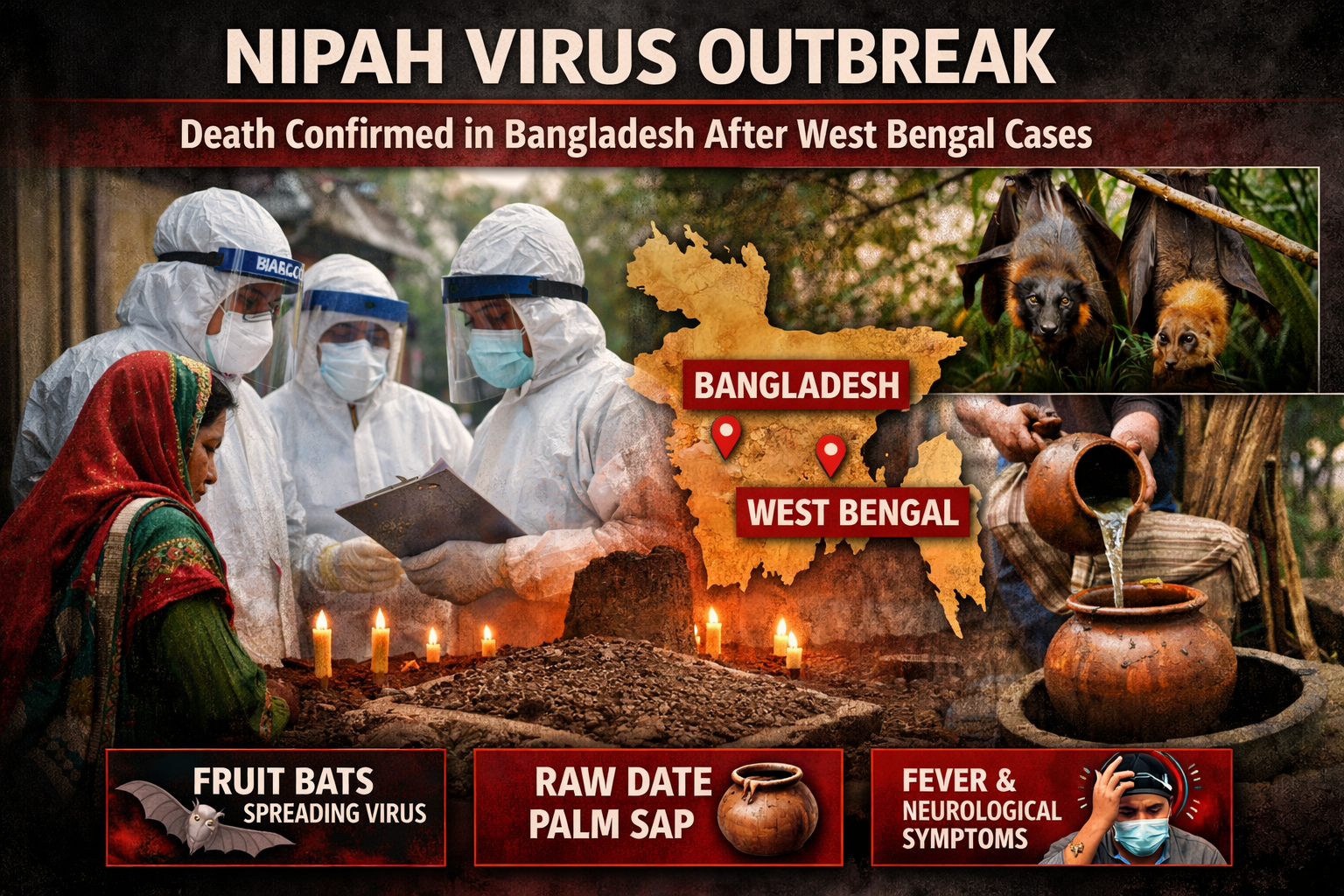
WHO Confirms Nipah Virus Death in Bangladesh After West Bengal Cases: Why the Region Is on Alert
The recent confirmation by the World Health Organization of a Nipah virus–related death in Bangladesh has once again drawn attention to a virus that quietly resurfaces every few years but carries serious consequences. The news comes just weeks after two Nipah cases were reported in West Bengal, making the timing and proximity impossible to ignore.
For people living in eastern India and Bangladesh, this is not just another international health headline. It feels closer to home. Nipah is one of those diseases that does not spread fast, but when it does appear, it creates anxiety because of its high fatality rate and the lack of a specific cure.
What Exactly Has WHO Confirmed?
According to the WHO, a woman in northern Bangladesh died after contracting the Nipah virus in late January. Health officials believe she was exposed through a known transmission route — consumption of raw date palm sap, which can be contaminated by fruit bats.
While only one fatal case has been confirmed so far, the response has been immediate. Dozens of people who came in close contact with the patient are being monitored, and surveillance has been stepped up across affected districts. The WHO has stated that the risk of international spread remains low, but local vigilance is essential.
Why the West Bengal Connection Matters
The confirmation of this death comes just weeks after two Nipah cases were detected in West Bengal, India. While the cases are not officially linked, the geographic closeness highlights how interconnected public health risks are in this region.
Eastern India and Bangladesh share dense populations, porous borders, similar food habits, and overlapping ecosystems. Fruit bats — the natural carriers of the Nipah virus — do not recognize borders. That reality makes coordinated monitoring and rapid information-sharing critical.
For many residents, especially those who remember earlier Nipah outbreaks in India and Bangladesh, the concern is familiar. The question people quietly ask is not “Will it spread worldwide?” but “Are we ready if more cases appear?”
Understanding Nipah Virus in Simple Terms
Nipah virus is a zoonotic disease, meaning it spreads from animals to humans. Fruit bats are its natural hosts. Humans can become infected by:
- Consuming contaminated food, especially raw date palm sap
- Direct contact with infected animals
- Close contact with infected humans (in limited cases)
Symptoms often start like a regular illness — fever, headache, weakness — but can quickly progress to serious neurological problems such as encephalitis. This sudden worsening is what makes Nipah particularly dangerous.
There is currently no specific antiviral treatment or licensed vaccine for Nipah. Medical care mainly focuses on managing symptoms and preventing complications.
Why Nipah Triggers Fear Despite Low Case Numbers
Unlike COVID-19 or influenza, Nipah does not infect thousands at once. Yet, it commands attention for three reasons:
- High fatality rate: In past outbreaks, death rates have ranged from 40% to over 70%.
- Rapid deterioration: Patients can worsen quickly, leaving little room for delayed response.
- Limited treatment options: Prevention and early detection are the strongest tools available.
This combination makes even a single confirmed death significant from a public health perspective.
What Authorities Are Doing Now
Health authorities in Bangladesh and India have activated standard outbreak protocols. These include:
- Contact tracing and isolation of high-risk contacts
- Public advisories against consuming raw date palm sap
- Hospital preparedness, especially in border regions
- Information sharing with international health bodies
The WHO has not recommended travel or trade restrictions, emphasizing that panic can be as harmful as complacency.
What This Means for Ordinary People
For the general public, especially in eastern India and Bangladesh, this is a reminder rather than a reason for alarm. Simple precautions can significantly reduce risk:
- Avoid consuming raw or unprocessed date palm sap
- Seek medical attention for unexplained fever with neurological symptoms
- Trust verified health advisories rather than social media rumors
Outbreaks like this test not only health systems but also public awareness and discipline.
A Familiar Warning, Not a New Threat
Nipah is not new to South Asia. Bangladesh reports sporadic cases almost every year, and India has experienced outbreaks in Kerala and eastern regions before. What’s different now is heightened global sensitivity to infectious diseases after recent pandemics.
The confirmed death in Bangladesh and the recent cases in West Bengal together serve as a reminder: some health threats don’t disappear — they resurface when conditions allow.
The Bigger Picture
The WHO’s confirmation is not meant to alarm the world but to encourage readiness. Nipah virus outbreaks are typically localized and containable when detected early. Strong surveillance, public cooperation, and transparent communication remain the most effective defenses.