
Full Article
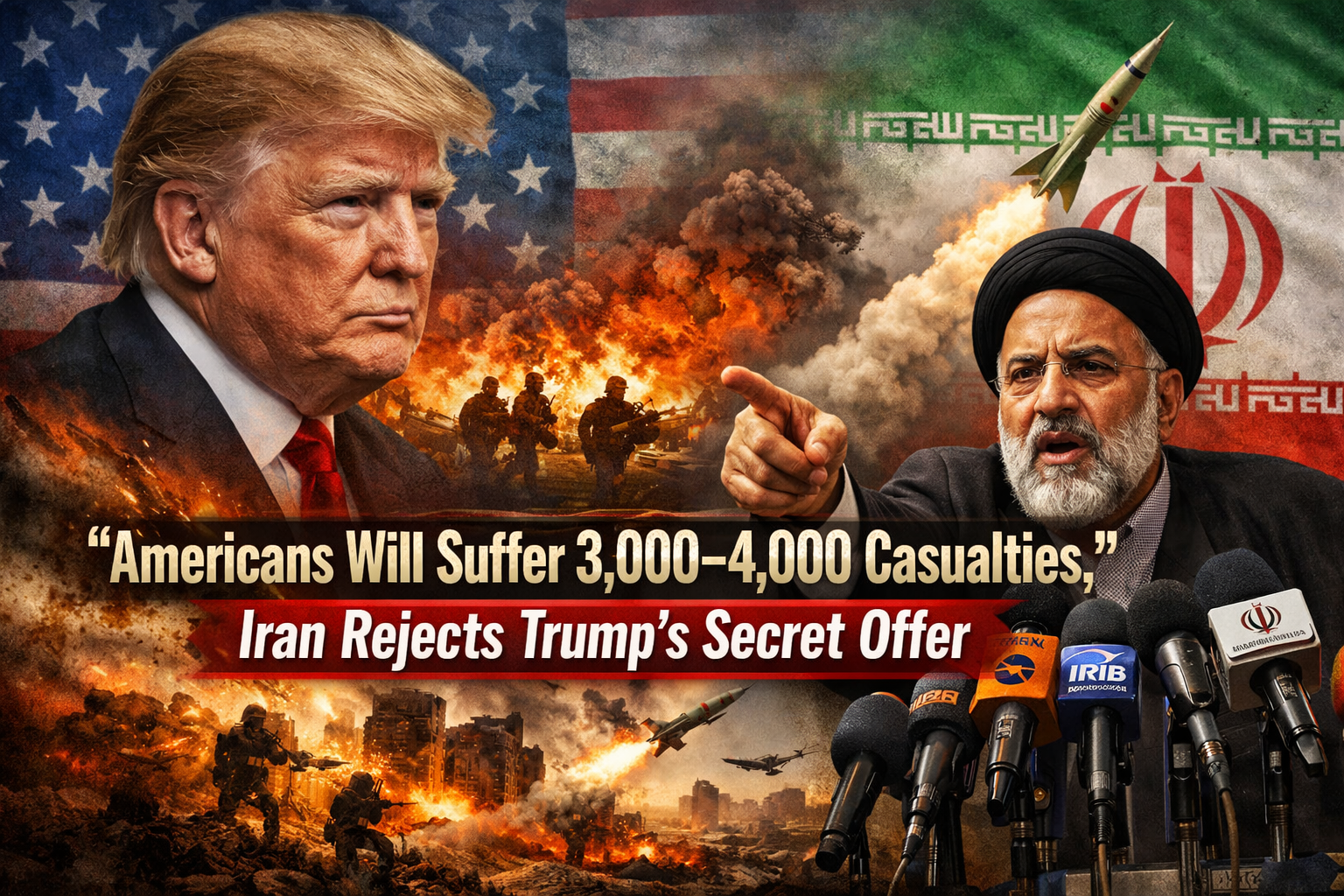
The words were blunt, dramatic, and clearly designed to travel far beyond Iran’s borders. When an Iranian lawmaker claimed that “Americans will suffer 3,000–4,000 casualties” if conflict breaks out, it wasn’t just another fiery soundbite. It was a message — one aimed at Washington, regional allies, and global audiences watching US–Iran tensions closely.
According to Iranian officials, a secret or back-channel offer allegedly linked to Donald Trump was recently rejected by Tehran. The claim has stirred debate, skepticism, and concern in equal measure. Whether the offer existed in the form described or not, the reaction tells us a lot about where US–Iran relations stand today.
What Is the Alleged “Secret Offer”?
Iranian lawmakers say the proposal involved a controlled military scenario — a limited US strike followed by a calibrated Iranian response, supposedly designed to prevent full-scale war while allowing political leaders on both sides to save face.
From Tehran’s perspective, this idea crossed a red line.
Iran’s response, at least publicly, was firm: any military action, no matter how “limited” on paper, would spiral quickly. And if that happens, the cost to American forces and interests would be severe.
It’s important to underline one thing clearly: there has been no official confirmation from the US side that such an offer was made. Washington has remained silent, which is typical when it comes to alleged back-channel diplomacy. Silence, however, doesn’t stop speculation — and Iran knows that.
Why Iran Rejected It — At Least Publicly
From a human and political point of view, Iran’s rejection fits a long-standing pattern.
Iranian leaders consistently argue that the US underestimates how quickly regional conflicts escalate. From Iraq to Afghanistan, history has taught Tehran that even carefully planned operations can spin out of control. By rejecting the idea outright, Iran positions itself as the side resisting war rather than inviting it.
There’s also domestic politics at play. Iranian leaders must show strength to their own public, especially at a time of economic pressure, sanctions, and regional instability. Accepting a proposal framed as “controlled strikes” would look like weakness at home — something few politicians in Tehran can afford.
The Casualty Warning: Strategy, Not Just Threat
The figure — 3,000 to 4,000 American casualties — grabbed headlines instantly. But beyond the shock value, it serves a strategic purpose.
Iran is signaling deterrence. The message is simple: even if the US believes it can manage escalation, Iran believes it cannot. The warning is meant to make decision-makers in Washington pause and rethink assumptions about military dominance.
This kind of messaging is not new. Both Washington and Tehran have used worst-case scenarios in the past to shape negotiations without firing a single shot. In that sense, the statement is less about predicting numbers and more about influencing choices.
Trump’s Shadow Still Looms Large
Even though Donald Trump is no longer in office, his name still carries weight in Tehran. Iranian officials often link current tensions to decisions made during his presidency — particularly the withdrawal from the nuclear deal and the “maximum pressure” sanctions campaign.
By tying the alleged offer to Trump, Iran may be doing more than responding to a single message. It may be reinforcing a broader narrative: that US policy toward Iran, regardless of who is in power, remains unpredictable and risky.
At the same time, Trump remains a powerful political figure in the US. Any claim involving him instantly becomes part of American domestic debate — something Iranian leaders are well aware of.
The Bigger Picture: Talks, Tensions, and Trust Deficit
Behind the headlines, indirect talks between the US and Iran have reportedly been taking place through mediators such as Oman. These discussions focus on nuclear issues, sanctions relief, and regional security.
But the trust deficit is enormous.
Iran doubts US guarantees. The US doubts Iran’s intentions. Every leaked claim, threat, or denial feeds into that cycle of suspicion. Even if the alleged offer never existed, the reaction shows how fragile communication channels are.
Why This Matters Beyond Iran and the US
What happens between Washington and Tehran rarely stays confined to those two capitals. Any escalation would ripple across the Middle East — affecting oil markets, shipping lanes, regional allies, and global economic stability.
For ordinary people, both in the region and beyond, this isn’t about geopolitics on paper. It’s about the fear that one miscalculation, one misunderstood message, could trigger consequences far larger than anyone intended.
Final Thoughts: Words as Weapons
At the end of the day, this episode is a reminder that in international politics, words are often used as weapons long before missiles ever are.
Iran’s rejection of Trump’s alleged secret offer — and its stark warning about casualties — may never be fully verified. But its impact is real. It shapes narratives, pressures policymakers, and keeps tensions simmering just below the boiling point.
Whether diplomacy can cool things down or rhetoric pushes them closer to confrontation remains the open question. For now, both sides appear to be sending messages — carefully chosen, loudly delivered, and meant to be heard far beyond their borders.