
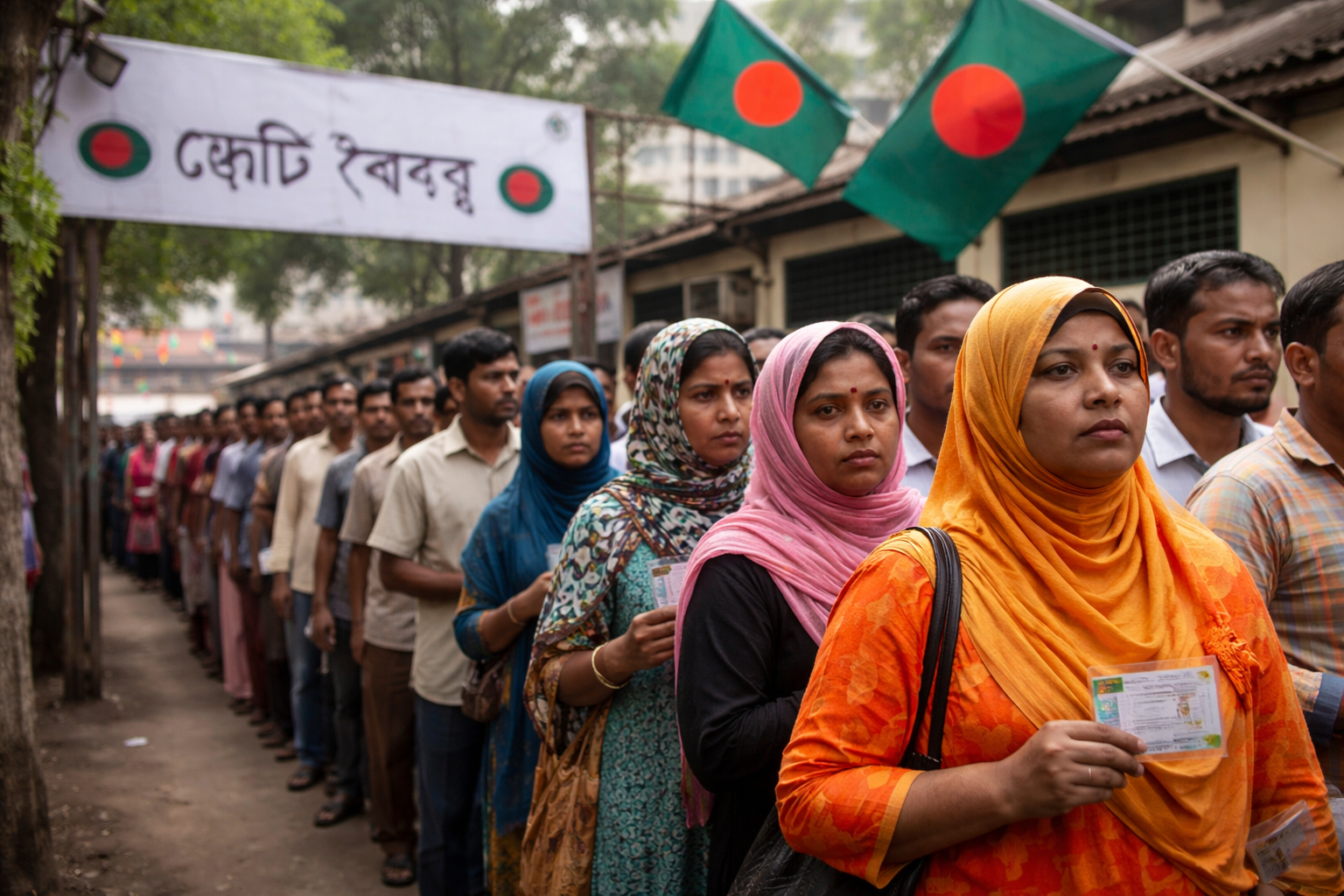
A Moment Filled With Hope — and Fear
For many people in Bangladesh, the days leading up to the upcoming election feel tense rather than hopeful. On paper, this should be a proud democratic moment: citizens choosing a new government and voting on constitutional reforms. In reality, conversations in tea stalls, university campuses, and living rooms tell a different story. There is curiosity, yes — but also worry, doubt, and a quiet fear that the country may be walking into another period of unrest.
Bangladesh has seen this cycle before. Elections are announced with promises of stability and renewal, only for disagreements over fairness and legitimacy to spill onto the streets. That memory is hard to forget. This time, the stakes feel even higher because the election is paired with a constitutional referendum, asking voters to decide the country’s political direction in one go.
Why This Election Feels Unsettling
This vote is taking place after months of political upheaval that changed the balance of power in the country. The departure of Sheikh Hasina following sustained protests marked a dramatic shift. Many Bangladeshis hoped this would open space for dialogue and reconciliation.
Instead, the political environment remains fragile. Some major political players are missing or weakened. New groups have entered the scene but lack deep roots among voters. As a result, many citizens question whether they are being offered a genuine choice.
The referendum adds another layer of uncertainty. Constitutional changes are complex by nature. They shape how power is shared, how leaders are checked, and how institutions function. Asking voters to make such decisions at the same time as choosing a government has left many feeling overwhelmed rather than empowered.
Candidates Speak of Anxiety, Not Confidence
What is striking about this election is how openly candidates are admitting their concerns. Instead of projecting confidence, many speak cautiously, even nervously.
Across political lines, candidates worry about what happens after the results are announced. If sections of society believe the election was unfair or incomplete, rejection of the outcome is almost certain. Bangladesh’s history shows that disputed elections rarely end quietly.
One candidate said privately, “People are voting, but they are not convinced. That’s dangerous.”
There is also concern about political exclusion. When influential voices or parties are absent, their supporters do not disappear — they become angry. That anger often finds expression through protests, strikes, and confrontations with authorities.
Experts Warn Against Rushed Decisions
Political analysts and constitutional experts say the warning signs are clear. Elections can help stabilize countries, but only when there is broad trust in the process. Right now, that trust is thin.
Experts argue that constitutional referendums require time and public discussion. Voters need to understand what is being changed and why. In the current environment, many fear people will vote based on emotion rather than understanding — supporting or opposing reforms simply to back or reject certain political forces.
There is also the risk of long-term disputes. If the referendum passes narrowly, or under contested conditions, it could become a permanent source of legal and political conflict. Instead of closing a chapter, Bangladesh may open several new ones.
Trust Remains the Core Problem
At the heart of the concern lies a simple issue: trust.
Many Bangladeshis remember elections marked by low turnout, opposition boycotts, and allegations of pressure. Those memories shape expectations today. Even young voters, voting for the first time, carry inherited skepticism from their families.
Civil society groups say trust cannot be rebuilt through official statements alone. It requires visible transparency — fair media coverage, independent observers, and clear communication about both the election and the referendum.
Without that, even a peaceful voting day may not translate into long-term acceptance.
The Real-Life Cost of Political Instability
Political instability is not just about headlines or power struggles. It affects everyday life.
When unrest spreads, businesses slow down and investors hesitate. Bangladesh’s export-driven economy, especially the garment sector, depends heavily on stability. Any prolonged disruption risks jobs and incomes.
For ordinary citizens, instability means school closures, transport disruptions, and loss of daily wages. Those living paycheck to paycheck suffer the most. Experts warn that another round of unrest could deepen social inequality and frustration.
International Eyes on Bangladesh
The international community is watching closely. Bangladesh is an important country in South Asia, both economically and strategically. Foreign governments and organizations have emphasized the importance of inclusive and credible elections.
However, legitimacy cannot be imported. No international endorsement can replace domestic acceptance. The true test will be whether Bangladeshis themselves believe the process was fair.
Is There a Way Forward?
Despite the concerns, instability is not inevitable. Analysts say much depends on how authorities act before and after the vote.
Calm policing, space for dissent, transparent counting, and honest communication could reduce tensions. Clear explanations of the referendum, in simple language, could help voters feel respected rather than confused.
One senior observer put it this way: “Elections don’t create stability by themselves. They only create an opportunity. What happens after matters more.”
A Defining Test for Bangladesh
This election and referendum represent a defining test for Bangladesh’s democracy. They could help the country move toward a more inclusive political system — or they could extend a cycle of uncertainty that citizens are tired of living through.
The warnings from candidates and experts are not attempts to delay democracy. They are reminders that democracy only works when people believe in it.
For millions of Bangladeshis, the hope is modest but powerful: that this vote leads to calm discussions instead of angry streets, and to a future shaped by consent rather than confrontation.