
Breaking News | Cricket
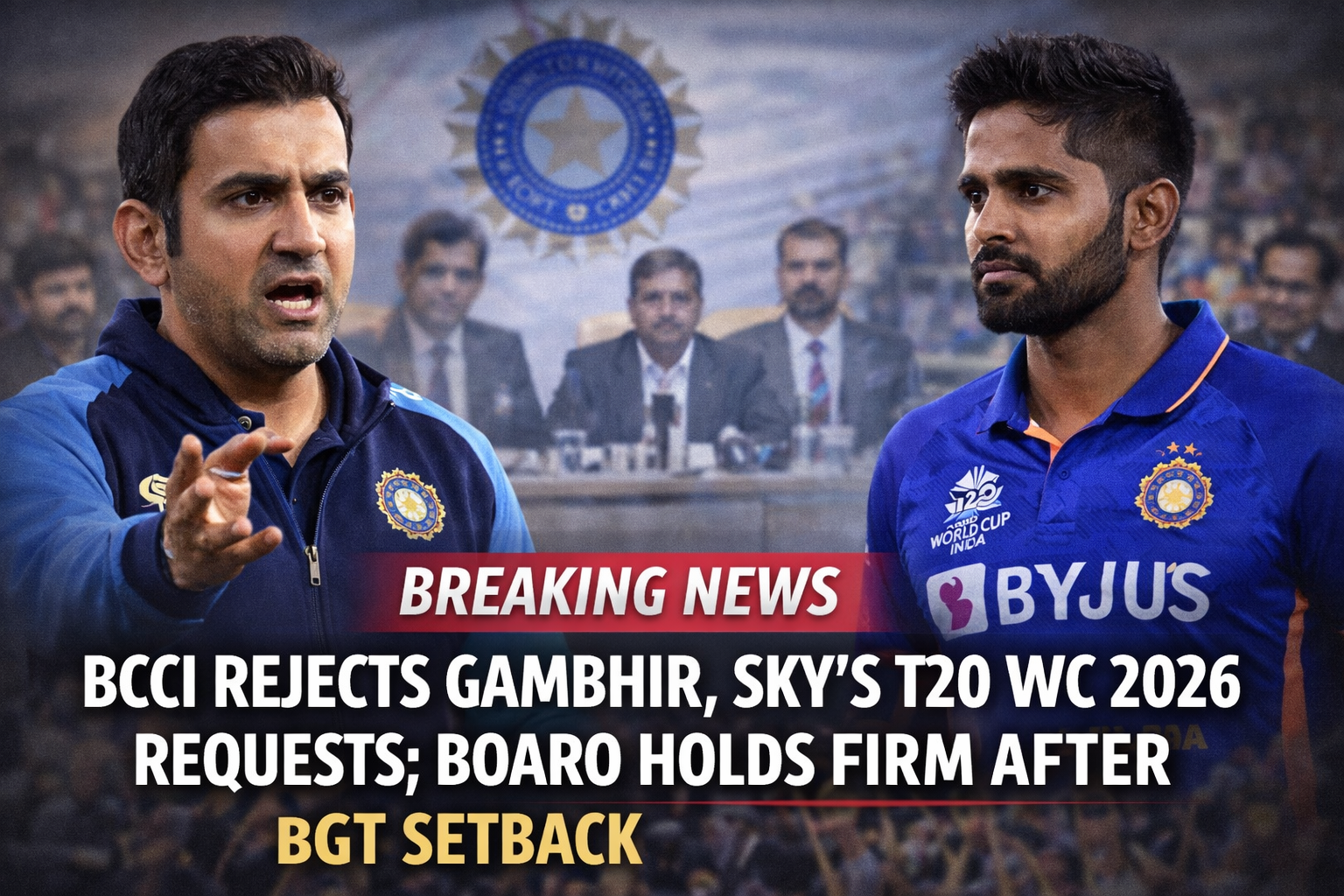
The Board of Control for Cricket in India (BCCI) has turned down requests from head coach Gautam Gambhir and T20 captain Suryakumar Yadav ahead of the ICC T20 World Cup 2026, choosing to enforce the strict policy it introduced after India’s Border-Gavaskar Trophy setback, a report said on Tuesday.
With this decision, the board has sent a clear message: India’s World Cup build-up will run on discipline, not discretion.
What Happened
According to the report, Gautam Gambhir and Suryakumar Yadav asked the board for greater flexibility in workload management, scheduling, and player availability as preparations for the 2026 T20 World Cup gather pace.
The BCCI reviewed the request and rejected it, deciding to maintain uniform rules for all players and staff.
Board officials believe that early firmness will prevent confusion later in the cycle.
Why the BCCI Said No
India’s disappointing run in the Border-Gavaskar Trophy forced the board to confront uncomfortable questions about preparation, fitness planning, and accountability.
After that series, the BCCI tightened its internal controls:
- It strengthened workload monitoring
- It reduced tolerance for special requests
- It clarified the board’s authority over team management
- It prioritised structure over individual convenience
By rejecting Gambhir and SKY’s request, the board applied those reforms in real time.
Clear Signal to Team Management
The decision draws a firm line between planning and policy.
Gambhir can shape tactics and mindset, but the BCCI will set the framework. The board does not want last-minute adjustments that disrupt long-term planning, especially before a global tournament.
For Suryakumar Yadav, the message carries weight. Despite his status as T20 captain, the board expects full compliance with selection and workload rules.
Officials insist that leadership roles will not bring exemptions.
Why This Matters Before a World Cup
The timing matters.
In previous cycles, the BCCI often adjusted rules deep into tournament preparations. This time, it has chosen early clarity instead of late compromise.
The board believes that:
- Flexibility in the past diluted accountability
- Comfort-based decisions hurt consistency
- Discipline slipped during crucial phases
By acting now, the BCCI hopes to lock in standards well before pressure peaks.
Mixed Views Likely
The decision will divide opinion inside and outside Indian cricket.
Supporters say India needs structure, not sympathy, after repeated ICC disappointments. They argue that elite teams succeed because systems matter more than individuals.
Critics warn that strict rules could limit tactical freedom in the fast-moving T20 format, where freshness and adaptability often decide matches.
For now, the board remains unmoved.
What Comes Next
The Indian team management will now rework plans within the existing framework. Gambhir and his support staff will focus on selection clarity, fitness benchmarks, and role definition under tighter oversight.
More firm calls are expected as the BCCI continues to assert institutional control in the lead-up to 2026.
Bottom Line
The BCCI’s rejection of requests from Gautam Gambhir and Suryakumar Yadav marks a decisive shift in approach.
After the Border-Gavaskar Trophy setback, the board has chosen authority over accommodation and structure over flexibility.
As the T20 World Cup approaches, the message stands unmistakable:
rules will not change — no matter who asks.