
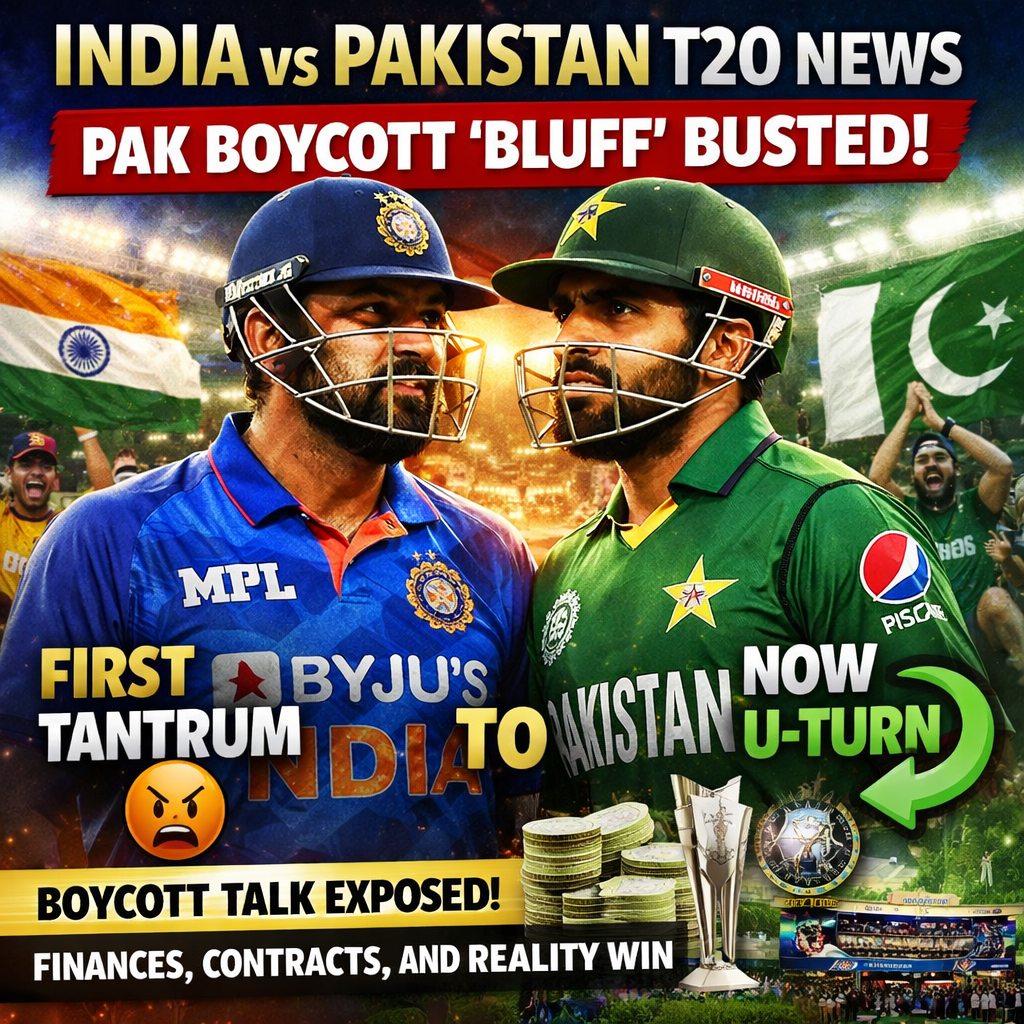
India vs Pakistan T20 News: Pak Boycott ‘Bluff’ Busted After First Tantrum, Now Sudden U-Turn
If there is one fixture in world cricket that refuses to stay simple, it is India vs Pakistan.
Every time these two teams are scheduled to meet in a T20 tournament, the noise starts weeks before the first ball is bowled. This time, however, the headlines were not about team selection or pitch conditions. They were about boycott threats, sharp statements, and what now looks like a quiet U-turn.
For a few tense days, it sounded serious. Voices from the Pakistan Cricket Board hinted at pulling back from matches involving India under certain conditions. The tone felt firm. Some even called it a matter of national pride.
But then, almost as suddenly as it began, the temperature dropped.
And that’s when people started asking — was this ever going to happen?
The First Tantrum: Strong Words, Stronger Headlines
When initial statements surfaced, they carried weight. A boycott in a global tournament is not a small decision. It impacts contracts, broadcasters, sponsors, and fans across continents.
The International Cricket Council structures major tournaments around marquee fixtures. India vs Pakistan is not just another group-stage match. It is the main event. Television ratings spike. Advertising rates shoot up. Social media trends explode.
So when boycott talk entered the conversation, it shook more than just cricket fans.
From a public standpoint, the message sounded clear: if certain concerns were not addressed, participation might be reconsidered. It created urgency. It created pressure.
But it also raised doubts.
The Financial Reality No One Can Ignore
Let’s speak honestly. India vs Pakistan T20 matches generate enormous revenue.
Broadcasters depend on this game. Sponsors build campaigns around it. Stadium tickets vanish within minutes. Digital platforms record record-breaking traffic.
Walking away from such a fixture is not only symbolic — it is financially painful.
For Pakistan, skipping a high-profile ICC match would affect revenue share and international positioning. For the ICC, it would disrupt tournament planning and global broadcasting agreements.
That financial gravity makes any boycott extremely complicated.
Sometimes emotions dominate headlines. But numbers quietly dominate decisions.
The U-Turn: From Defiance to Diplomacy
After days of firm rhetoric, the tone softened. Officials clarified their commitment to ICC tournaments. Participation was no longer in question. The earlier warning seemed to fade into a “misinterpretation.”
Critics were quick to call it a bluff. Supporters framed it as strategic pressure. Either way, the shift was visible.
Former Indian captain Sunil Gavaskar has often argued that once international commitments are signed, they must be honored. Cricket cannot function on emotional reactions alone.
This episode appears to reinforce that reality.
The so-called tantrum gave way to practicality.
Politics, Pride, and the Power Game
India vs Pakistan cricket has never been purely about sport. Political tension always lingers in the background. Even neutral venues cannot completely remove that emotional charge.
But this particular controversy feels less about politics and more about negotiation leverage.
Was the boycott threat a tool to push for venue adjustments or stronger bargaining power? Many analysts think so.
Boards understand media cycles. They know how public pressure can influence discussions. A strong statement can open doors that quiet diplomacy cannot.
Yet, when it comes to ICC events, contracts and global expectations act as guardrails.
In the end, pragmatism often wins.
Fans: The Real Stakeholders
What makes this rivalry special is not just boardroom drama. It is the fans.
Millions of supporters across India and Pakistan wait for these T20 clashes with unmatched intensity. Families gather around televisions. Offices pause. Streets go silent.
When boycott talk surfaced, reactions were immediate. Some backed a hard line. Others dismissed it as unrealistic. Social media turned into a battlefield of opinions.
And when the U-turn happened? The reaction was mixed.
Some saw it as sensible maturity. Others saw embarrassment. But one thing remained unchanged — excitement for the match itself.
Deep down, fans want the cricket.
Why India vs Pakistan T20 Still Rules Global Cricket
No other bilateral rivalry in modern cricket matches this emotional scale.
India vs Pakistan T20 fixtures combine history, pride, and unpredictable drama. Even neutral viewers tune in because the intensity feels different.
The ICC understands this. Broadcasters understand this. Even sponsors plan long-term strategies around this one encounter.
That is why boycott threats rarely materialize into action.
The stakes are simply too high.
What This Means Going Forward
The immediate crisis appears to have settled. The match is expected to proceed as scheduled. Official silence has replaced earlier noise.
But this episode leaves a reminder.
Cricket today operates at the intersection of sport, politics, and business. Statements may sound absolute, but realities are rarely black and white.
The Pakistan boycott threat might have been a negotiating tactic. It might have been emotional reaction. It might have been both.
What matters now is clarity.
India vs Pakistan T20 remains on track. The rivalry continues. And once the players walk onto the field, none of this off-field drama will matter for those 40 overs.
Final Thoughts: Bluff Exposed or Strategy Played?
From the outside, it looks like a bluff that could not hold.
From another angle, it looks like a calculated move that reached its limit.
Either way, the sudden shift shows that cricket governance is rarely driven by emotion alone. Financial commitments, global reputation, and contractual obligations shape the final outcome.
The tantrum made headlines.
The U-turn made statements.
But the match will make history.
And when India faces Pakistan in T20 action again, fans will remember the drama — but they will watch the cricket.
Because in the end, no boycott talk can replace the electricity of that first ball.