
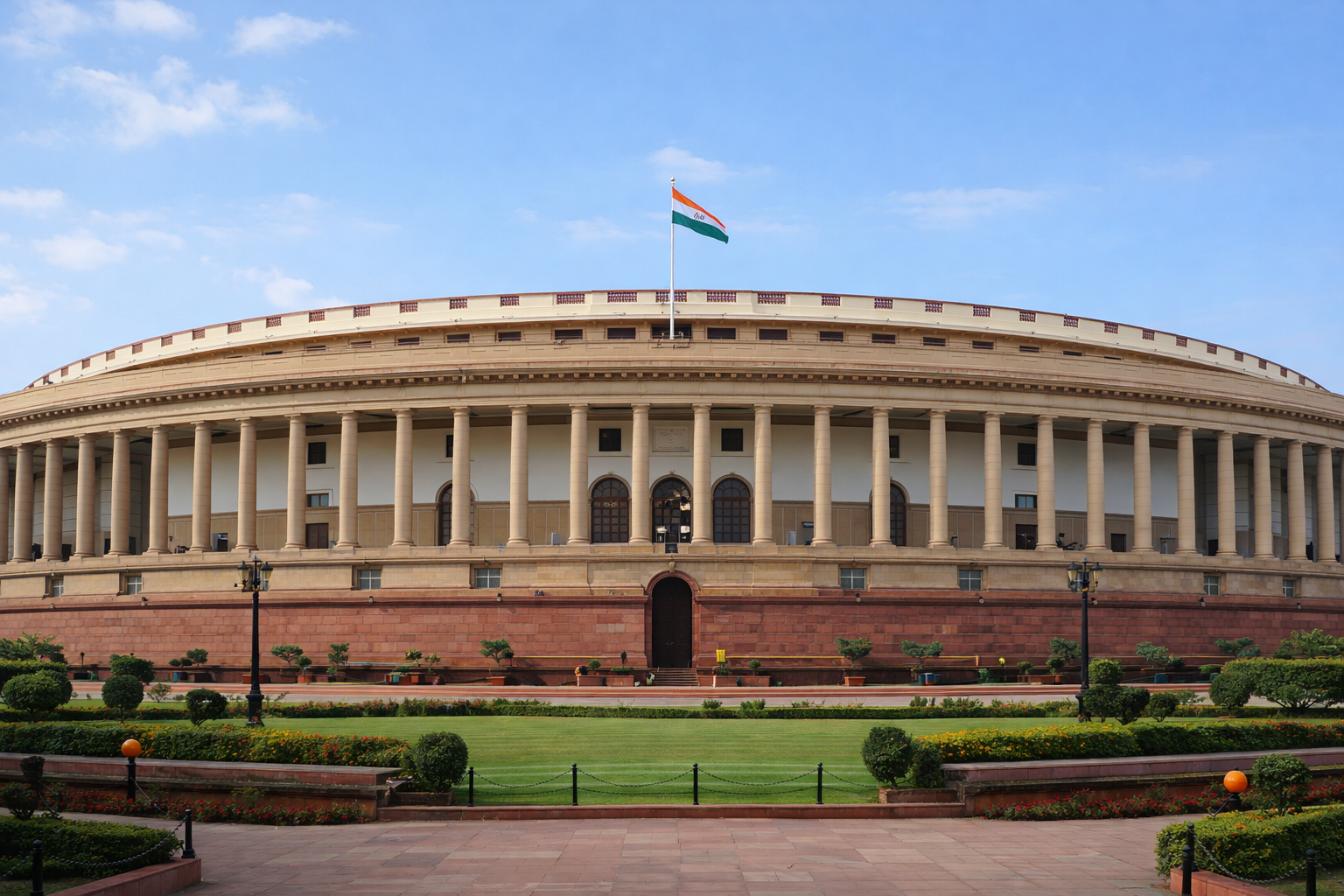
India’s political atmosphere has sharpened noticeably as the ongoing Budget Session of Parliament evolves into more than just a legislative exercise. What began as a routine economic discussion has now turned into a broader political contest, with both the government and the opposition trying to define the national narrative ahead of a crucial election cycle.
At the centre of the storm lies a familiar yet powerful theme: perception. While numbers and policies dominate official speeches, the real fight appears to be over how citizens interpret those numbers — growth versus inequality, development versus distribution, stability versus accountability.
A Budget That Became Political Ammunition
The Union Budget has always carried political weight, but this year’s session feels unusually charged. The government has leaned heavily on themes like infrastructure expansion, digital transformation, and India’s rising global profile. From highways and rail corridors to semiconductor ambitions, the messaging has been clear — India is moving forward, and momentum must not be disrupted.
However, the opposition has chosen to frame the same moment differently. Instead of focusing purely on macroeconomic indicators, critics are highlighting everyday concerns: price rise, job creation, and rural distress. By shifting the conversation from growth percentages to household experiences, opposition leaders are trying to bring the debate closer to voters’ lived realities.
This contrast — macro optimism versus micro discomfort — is shaping much of the political discourse right now.
The Centre vs States Undercurrent
Beyond Parliament speeches, another layer of tension is quietly shaping the political landscape: the Centre-state relationship. Several state governments have increasingly raised concerns about fiscal autonomy, revenue sharing, and administrative authority.
While these debates are not new, their tone has sharpened. Regional leaders are framing the issue as one of federal balance, arguing that strong states are essential for a strong Union. The Centre, on the other hand, has maintained that coordinated governance is necessary for national progress.
This push and pull is likely to remain a defining subplot in Indian politics, especially as regional parties try to protect their turf while national parties aim to expand influence.
Opposition Unity: Reality or Optics?
One of the biggest questions hovering over Indian politics today is whether opposition unity will translate from press conferences into ground-level coordination. Over the past year, multiple opposition leaders have spoken about the need for a broader alliance to challenge the ruling establishment.
Yet, practical hurdles remain. Regional ambitions, leadership questions, and ideological differences continue to complicate alliance-building. While joint statements create headlines, electoral arithmetic often tells a more complex story.
For now, what exists is a mix of cooperation and competition — unity in messaging, fragmentation in execution.
The BJP’s Narrative Advantage
The ruling BJP still holds a strong narrative advantage, particularly when it comes to framing the political conversation around stability and continuity. The party’s messaging consistently ties governance with national pride, infrastructure with aspiration, and leadership with decisiveness.
This approach has worked effectively in recent years, especially among first-time voters and urban segments. By blending development with identity-driven messaging, the BJP has managed to create a layered political appeal that is difficult to counter with a single narrative.
Moreover, the party’s well-oiled organisational machinery ensures that national messaging quickly travels to the grassroots level.
Regional Parties Refuse to Fade
Even as national narratives dominate headlines, regional parties remain deeply relevant. In states like Tamil Nadu, West Bengal, Telangana, and Odisha, local leadership still commands strong loyalty.
These parties are increasingly positioning themselves as defenders of regional identity and federal autonomy. Instead of confronting national parties head-on everywhere, many are doubling down on stronghold states while selectively expanding influence.
This creates a multi-layered electoral map where national dominance and regional resistance coexist.
Youth and Digital Politics Changing the Game
One of the most noticeable shifts in recent years is the rise of digital-first politics. Political communication is no longer confined to rallies and television debates. Social media clips, short videos, and real-time messaging now shape public opinion at unprecedented speed.
Young voters, in particular, are engaging with politics differently. They are less tied to traditional party loyalties and more influenced by issue-based conversations. Employment, education, startup ecosystems, and global mobility are emerging as key talking points among urban youth.
This shift is forcing political parties to adapt both tone and platform. Messaging is becoming sharper, more visual, and more immediate.
What Lies Ahead
As the Budget Session progresses, the political temperature is unlikely to cool anytime soon. Instead, the coming months may see sharper rhetoric, more visible alliances, and intensified ground campaigns.
Three broad themes are likely to dominate Indian politics in the near term:
- Economic storytelling — competing claims over growth and inequality
- Federal debates — Centre-state power dynamics
- Narrative battles — perception shaping over policy details
While legislative outcomes will matter, the larger takeaway may be how effectively each side communicates its vision to voters.
A Narrative Election in the Making?
If current trends continue, the next phase of Indian politics may revolve less around single issues and more around overarching narratives. Stability versus change. Centralisation versus federalism. Growth versus distribution.
In many ways, the groundwork for that contest is already visible inside Parliament and across political speeches nationwide.
And as history has shown, in Indian politics, the battle of narratives often begins long before the ballots are cast.