
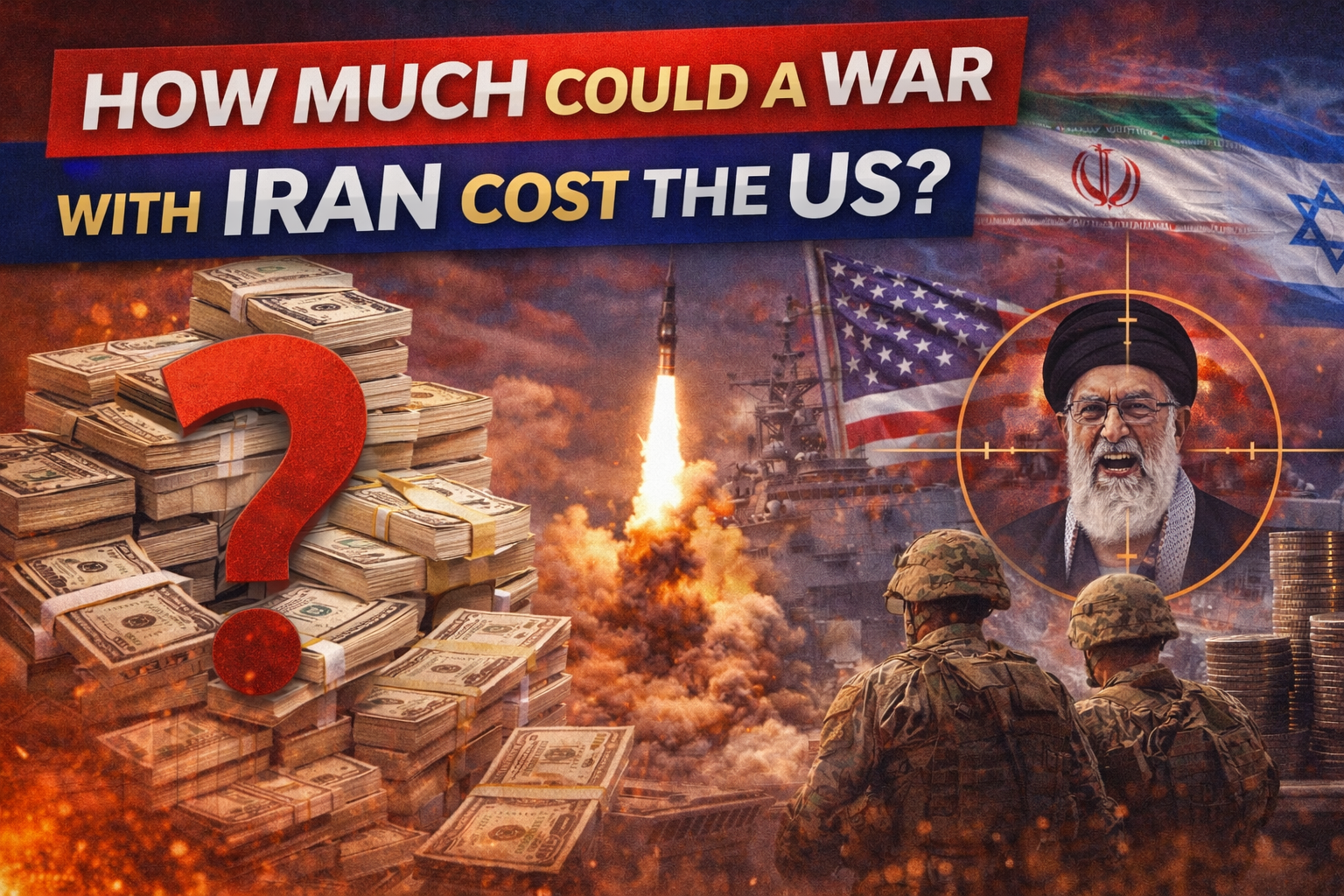
The first thing to understand is this — wars don’t come with price tags printed on them.
You only see the numbers later.
Right now, after U.S. strikes involving Iran, people are asking the obvious question: how much could this cost? The answer depends on how long it lasts and how far it spreads.
Even so, early signs suggest the spending starts fast.
The First Days Are Never Cheap
Military operations burn through money quickly. Jets don’t fly for free. Missiles aren’t inexpensive. Aircraft carriers alone cost millions of dollars a day to operate, even before combat begins.
If you stack up fuel, precision weapons, surveillance flights and naval deployments, the bill can reach hundreds of millions almost immediately.
That’s just the opening phase.
And opening phases have a habit of expanding.
If It Stays Limited
There’s a big difference between a short burst of strikes and a drawn-out campaign.
If the action remains contained — a few days, maybe a week — the Pentagon can absorb much of it within its massive annual budget. The U.S. already spends hundreds of billions each year on defense.
However, even limited actions require replacing weapons, servicing aircraft and repositioning forces. So the spending doesn’t stop when the headlines fade.
Still, short conflicts are financially manageable compared to long ones.
If It Grows
Now here’s where the numbers shift.
If operations stretch into weeks or months, costs move into the billions. Continuous air patrols, missile defense systems, naval protection for shipping lanes — all of it adds up.
Maintenance becomes a serious expense. Equipment wears out faster during combat readiness. Ammunition stocks must be replenished. Contractors step in. Budgets expand.
History shows this clearly. The Gulf War cost tens of billions. Iraq and Afghanistan eventually reached far higher totals once long-term care and reconstruction were included.
No one can say yet whether this situation would reach that scale. But escalation is expensive.
The Oil Factor
Money doesn’t just flow through the Pentagon.
Energy markets react almost instantly to tension in the Middle East. Traders watch shipping routes closely, especially around key oil passages.
When uncertainty rises, oil prices tend to jump. That filters down to gas stations. It also affects airline tickets, shipping costs and grocery prices.
So even Americans far from the region can feel the impact in their wallets.
That effect can show up faster than the official military spending numbers.
The Hidden Costs
There’s another layer people sometimes forget.
When wars last, veteran care becomes part of the equation. Medical treatment, disability payments and long-term support stretch for decades. Economists who studied past conflicts say those long-term costs often rival or exceed initial combat spending.
In other words, the final bill is rarely limited to what was spent during active fighting.
It keeps going.
What Congress Will Watch
If spending rises sharply, lawmakers will have to approve additional funding.
Short actions often fall under executive authority. Larger campaigns require congressional approval, especially when extra money is needed.
That’s where political tension enters the picture.
Some argue that acting early prevents bigger threats later. Others worry about repeating costly Middle East entanglements.
Debates about strategy and debates about money usually happen at the same time.
Could It Reach Trillions?
Right now, talking about trillions would be guesswork.
That kind of total only appears when conflicts drag on for years and include rebuilding efforts, interest on borrowed funds and long-term care.
However, previous wars show how totals can expand beyond early estimates.
So while it’s too early to attach a final figure, it’s reasonable to assume the number grows with time.
The Real Bottom Line
If this remains brief and contained, costs may stay in the hundreds of millions or low billions.
If it widens or stretches out, the total climbs quickly.
That’s the pattern history gives us.
War spending is rarely predictable at the start. It unfolds step by step. Each new phase adds another layer of cost — some visible, some hidden.
Right now, the biggest variable isn’t the first strike. It’s what happens next.
And that’s something no spreadsheet can calculate yet.