
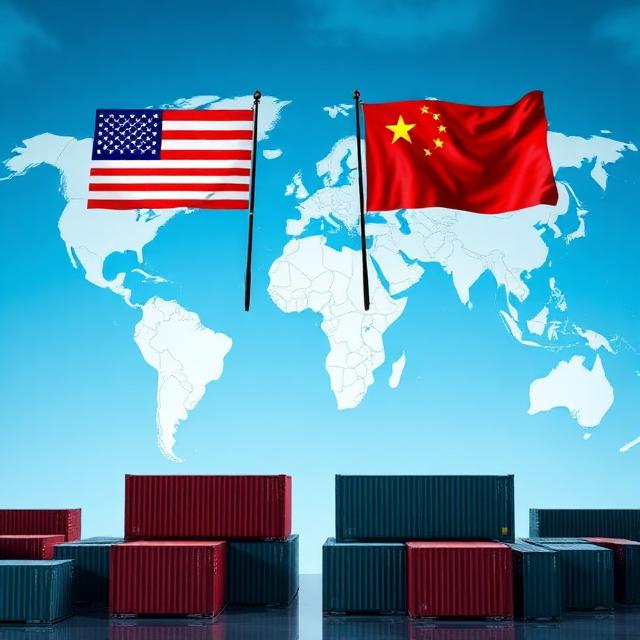
Trade Talks Lose Momentum
Officials from both countries had been attempting to restart meaningful dialogue after several rounds of negotiations over the past year. Early signals suggested that progress was possible, particularly on areas such as agricultural imports and market access.
However, recent discussions appear to have slowed significantly.
Diplomatic sources say disagreements have emerged around key policy areas, including export controls on advanced technology and concerns about industrial subsidies. These issues strike at the core of both countries’ economic strategies, making compromise difficult.
Without clear progress, many observers fear that negotiations could remain frozen for months.
Technology at the Heart of the Dispute
One of the most sensitive areas of disagreement is technology.
The United States has tightened restrictions on the export of advanced semiconductors and manufacturing equipment to China. Washington argues that these measures are necessary for national security, especially in sectors linked to artificial intelligence and military development.
China, however, views these restrictions as an attempt to slow its technological growth.
Chinese officials have repeatedly criticized the policies, saying they undermine fair competition and disrupt global supply chains. As a result, technology has become one of the most complex obstacles in the broader trade relationship.
Global Markets Watching Closely
Whenever tensions rise between Washington and Beijing, the effects ripple across the global economy.
International markets tend to react quickly to signs of conflict between the two powers. Investors worry about disruptions to supply chains, rising tariffs, and uncertainty in global trade rules.
Manufacturers are particularly sensitive to these developments. Many companies depend on supply networks that stretch across both countries, meaning political disagreements can quickly affect production and costs.
Even small changes in trade policy can have global consequences.
Businesses Face Uncertainty
For multinational companies, the stalled talks add another layer of unpredictability.
Many businesses have already spent years adjusting to earlier trade tensions between the two countries. Some have moved manufacturing operations to other parts of Asia, while others have diversified suppliers to reduce risk.
Still, the deep economic ties between the United States and China mean that a complete separation is unlikely.
Companies operating in sectors like electronics, automobiles, and consumer goods continue to rely on both markets. When negotiations stall, planning for the future becomes far more complicated.
Political Pressure on Both Sides
Domestic politics also play a role in shaping trade policy.
In the United States, leaders face pressure to protect domestic industries and maintain a tough stance on national security issues. At the same time, policymakers want to avoid policies that could harm economic growth or disrupt global markets.
China faces its own internal challenges. Economic growth has slowed compared with previous decades, and leaders are eager to maintain stability while strengthening the country’s position in advanced industries.
These political realities often make negotiations more complex than they appear.
A Long-Term Strategic Rivalry
Beyond trade disputes, the relationship between Washington and Beijing has increasingly taken on a strategic dimension.
Both countries see themselves as leaders in shaping the future of global technology, manufacturing, and economic influence. That competition extends into areas such as artificial intelligence, clean energy, and telecommunications.
Trade talks often become a reflection of this broader rivalry.
As a result, resolving individual disputes does not always lead to lasting stability. Even when agreements are reached, new disagreements can quickly emerge.
What Could Happen Next?
Despite the current slowdown, diplomatic channels between the two governments remain open.
Economic advisers from both countries continue to meet in smaller working groups, and analysts say there is still interest on both sides in preventing tensions from escalating too far.
Several possible outcomes remain on the table:
- Renewed negotiations with limited agreements on specific industries
- Continued stalemate with no major breakthroughs
- New economic restrictions that further strain relations
Much will depend on political priorities and economic conditions in both countries over the coming months.
The Global Stakes
The importance of the U.S.–China relationship extends far beyond the two nations themselves.
Together, they account for a massive share of global trade and economic output. When their relationship becomes unstable, the effects can reach every corner of the world—from commodity markets to technology supply chains.
Countries across Europe, Asia, and Africa closely monitor these developments because shifts in U.S.–China relations can reshape international commerce.
For now, the pause in trade talks serves as a reminder that the rivalry between the two economic giants remains one of the defining challenges of the modern global economy.