
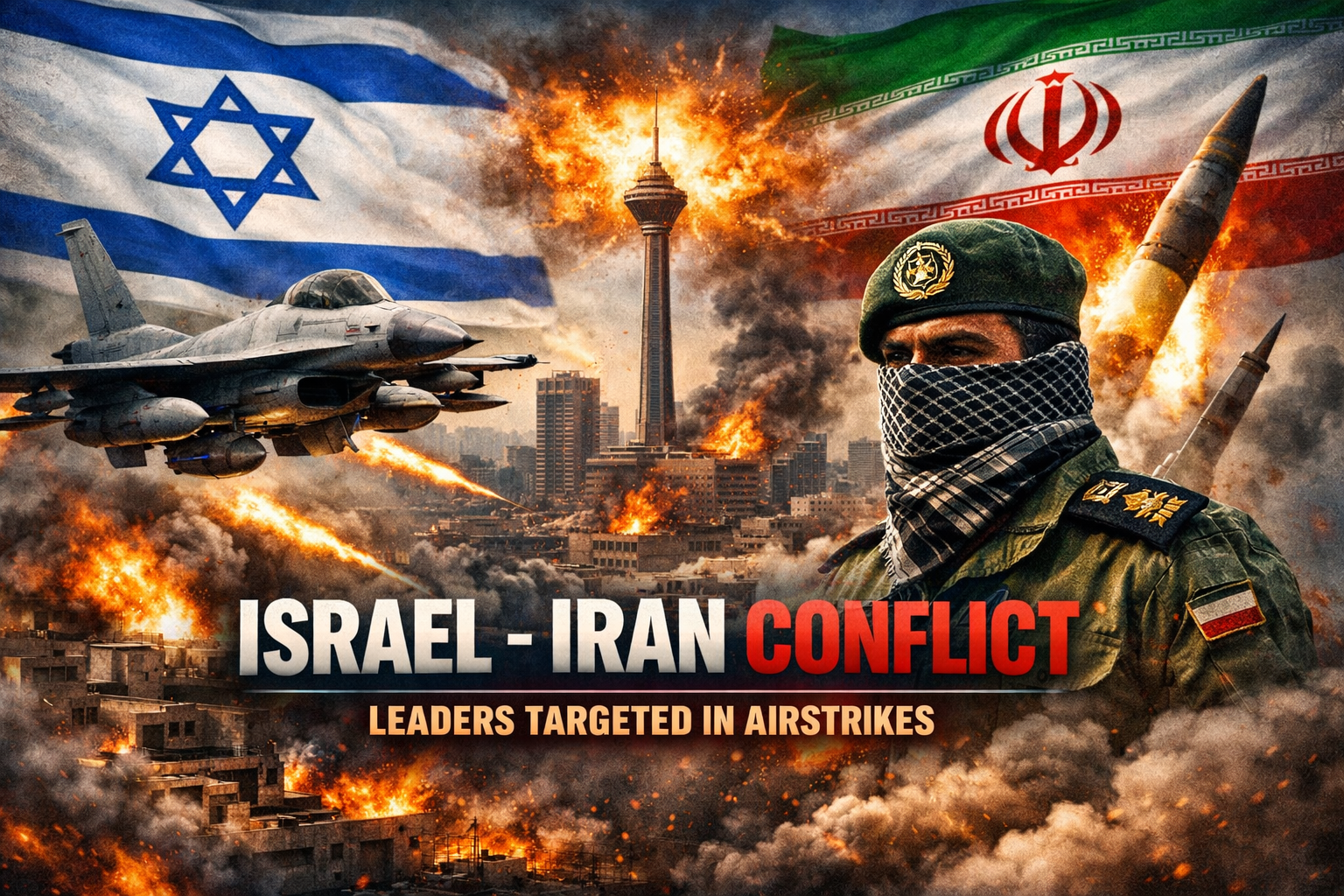
The long-running tension between Israel and Iran has taken a dramatic turn after a series of airstrikes reportedly targeted senior Iranian officials. The developments mark one of the most serious escalations between the two regional powers in recent years, raising fears that the conflict could widen beyond their borders and destabilize the entire Middle East.
According to Israeli officials, the strikes were aimed at key figures within Iran’s security establishment. Among those reportedly targeted was Ali Larijani, a prominent political figure who has played a major role in shaping Iran’s national security policies. Israeli defense authorities claim the attack dealt a significant blow to Tehran’s leadership network, although Iranian officials have not yet fully confirmed the reports about casualties among senior leaders.
A Conflict Years in the Making
The rivalry between Israel and Iran has been building for decades. While the two countries have rarely fought a direct war, they have often clashed through proxy conflicts, cyber operations, and covert military actions across the region.
Israel has repeatedly warned that Iran’s growing military capabilities — particularly its missile programs and nuclear ambitions — pose a serious threat to its national security. Iranian leaders, meanwhile, view Israel as a hostile power backed by Western allies and accuse it of destabilizing the region.
Over the past few years, tensions have steadily intensified. Israel has carried out several operations aimed at Iranian military infrastructure, while Iran has expanded its network of regional allies and militia groups. These developments have created a fragile environment where a single incident can quickly spiral into a larger confrontation.
The Airstrikes That Triggered the Escalation
The latest escalation began after Israel launched what it described as “precision strikes” on strategic locations linked to Iran’s security establishment. Israeli defense officials said the operation targeted facilities connected to decision-making and command structures within Iran’s security apparatus.
Reports suggested that the strikes may have hit locations in or near Tehran, sending shockwaves through Iran’s political establishment. If the death of senior leaders is confirmed, analysts say it would represent one of the most significant blows to Iran’s leadership in recent years.
However, Iranian authorities have urged caution regarding early reports, stating that investigations are still underway and that the full details of the attack have not yet been confirmed.
Iran Signals Possible Retaliation
Following the strikes, Iranian officials condemned the attack and warned that Israel would face consequences. Tehran has historically responded strongly to actions it perceives as threats to its leadership or national sovereignty.
Iran possesses a wide range of military capabilities, including ballistic missiles, drones, and regional alliances that could potentially be used to respond to Israeli operations. Analysts say that any large-scale retaliation could risk triggering a broader regional conflict.
Countries across the Middle East are watching the situation closely. Governments in the Gulf region have already raised security alerts around energy facilities and major infrastructure, fearing that the confrontation could spread beyond the immediate conflict.
Global Concerns Over Energy and Security
The escalation has also drawn international attention because of its potential impact on global energy markets. Much of the world’s oil supply moves through the Strait of Hormuz, a strategic shipping route located near Iran.
Any disruption to shipping in that area could push global oil prices sharply higher and affect economies around the world. Energy analysts say even the threat of conflict in the region can trigger volatility in oil markets.
Major powers, including the United States and European countries, have urged restraint from both sides. Diplomatic channels are reportedly working behind the scenes to prevent the situation from escalating into a full-scale war.
The Risk of a Wider Middle East Conflict
Military experts warn that the Israel–Iran confrontation carries risks far beyond the two countries themselves. Both nations have influence across multiple parts of the Middle East, from Syria and Lebanon to Iraq and the Gulf.
If the conflict expands, it could draw in regional actors and potentially disrupt trade routes, energy supplies, and political stability across the region. In the past, clashes between Israeli forces and Iran-aligned groups have already led to periodic spikes in violence.
For now, international observers are closely monitoring whether the latest escalation will lead to further military exchanges or whether diplomatic efforts will succeed in calming tensions.
What Happens Next?
At the moment, the situation remains fluid. Israeli officials have framed the operation as a necessary step to weaken Iran’s strategic leadership. Iranian leaders, on the other hand, have vowed that any attack on their territory will not go unanswered.
The coming days are likely to determine whether this incident becomes another chapter in the long shadow conflict between the two nations — or the beginning of a more dangerous regional confrontation.
For the rest of the world, the stakes are clear. What happens between Israel and Iran rarely stays confined to their borders. In a region already marked by fragile political balances, even a single escalation can reshape the geopolitical landscape.