
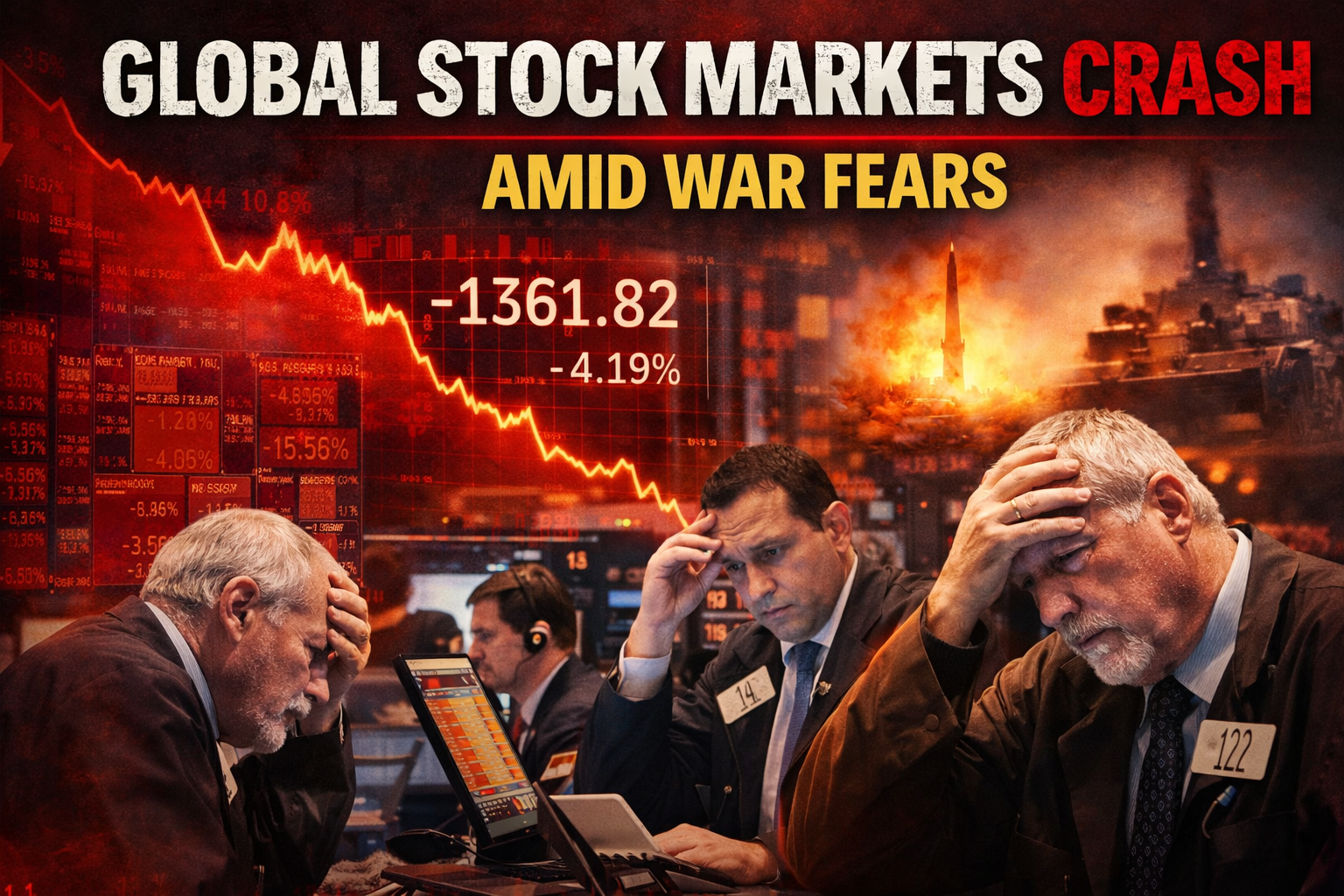
Within hours, markets across the world flipped from cautious to nervous — and then from nervous to outright shaky.
The trigger? Rising tensions in the Middle East.
You could see it instantly on trading screens. Red everywhere. Asian markets opened weak and slid further as the day went on. European markets followed the same path. By the time U.S. futures came into focus, the mood was already set — this wasn’t going to be a calm session.
🌍 A Global Reaction, Not Just One Market
What makes this different from a typical bad day is how widespread the reaction has been.
- Asian indices dropped sharply, with some markets seeing their worst session in months
- European stocks followed, dragged down by energy concerns
- U.S. markets showed volatility even before opening
This kind of synchronized fall usually means one thing — a global trigger.
And right now, that trigger is fear.
Not confirmed damage. Not actual shortages yet. Just the growing sense that something bigger could happen.
⚠️ Why Markets Are Falling
Markets don’t wait for events to fully unfold. They move on expectations.
The current concern is simple: if tensions escalate and the Strait of Hormuz is disrupted, oil supply could take a hit. That alone is enough to send shockwaves through the global economy.
Higher oil prices mean:
- Increased costs for companies
- Lower profit margins
- Higher inflation
- Slower economic growth
Put all that together, and investors start pulling back.
It’s not panic selling — not yet — but it’s definitely risk reduction.
💰 Where the Money Is Going
When uncertainty rises, money doesn’t disappear. It just moves.
Right now, investors are shifting toward safer options:
- Government bonds
- Cash positions
- Defensive sectors
At the same time, sectors like airlines, manufacturing, and logistics are taking a hit. These industries depend heavily on fuel, so rising oil prices hit them first.
Tech stocks have also shown weakness, not because of oil directly, but because high uncertainty affects overall investment sentiment.
🛢️ Oil Is Driving the Fear
Even if you don’t follow markets closely, one number explains most of what’s happening — oil prices.
As crude prices climb, markets react almost automatically.
It’s not just about energy companies. Oil affects:
- Transportation
- Food supply chains
- Manufacturing costs
- Consumer spending
So when oil rises quickly, markets assume trouble ahead.
That’s exactly the pattern we’re seeing now.
📊 Not a Crash Yet — But a Warning
Let’s be clear — this isn’t a full financial crash like 2008.
But it’s not nothing either.
This kind of broad-based decline is often an early warning signal. It tells us that investors are uncomfortable with the current situation and are preparing for possible downside.
Markets can recover quickly if tensions ease. We’ve seen that before.
But if things escalate, these early declines can turn into deeper corrections.
🔄 Volatility Is the Real Story
One of the biggest signs of uncertainty is not just falling markets — it’s how quickly they move.
Sharp drops. Sudden recoveries. Then another drop.
That back-and-forth is what traders call volatility. And high volatility usually means one thing — nobody is sure what comes next.
Right now, every new headline is moving markets:
- A warning → markets fall
- A diplomatic signal → markets bounce
- A new tension → markets drop again
It’s a constant reaction cycle.
🌐 What This Means for Everyday People
You might not be trading stocks, but market movements often reflect what’s coming next in the economy.
If this continues:
- Investment confidence may slow
- Businesses may delay expansion
- Hiring could become cautious
- Prices of goods may rise due to higher costs
Again, it won’t hit overnight. But these shifts usually show up gradually.
🧠 The Bigger Picture
Right now, the market isn’t reacting to what has already happened.
It’s reacting to what could happen.
That’s an important difference.
If tensions ease, markets could bounce back quickly. Money is still there — just waiting on the sidelines.
But if the situation worsens, especially around key oil routes, the pressure could build fast.
📌 Final Thought
This isn’t just a “bad market day.”
It’s a signal.
A signal that the global system is sensitive right now. That even a regional conflict can shake financial confidence worldwide.
And until there’s clarity, expect more of the same:
Ups, downs, and a lot of uncertainty in between.