
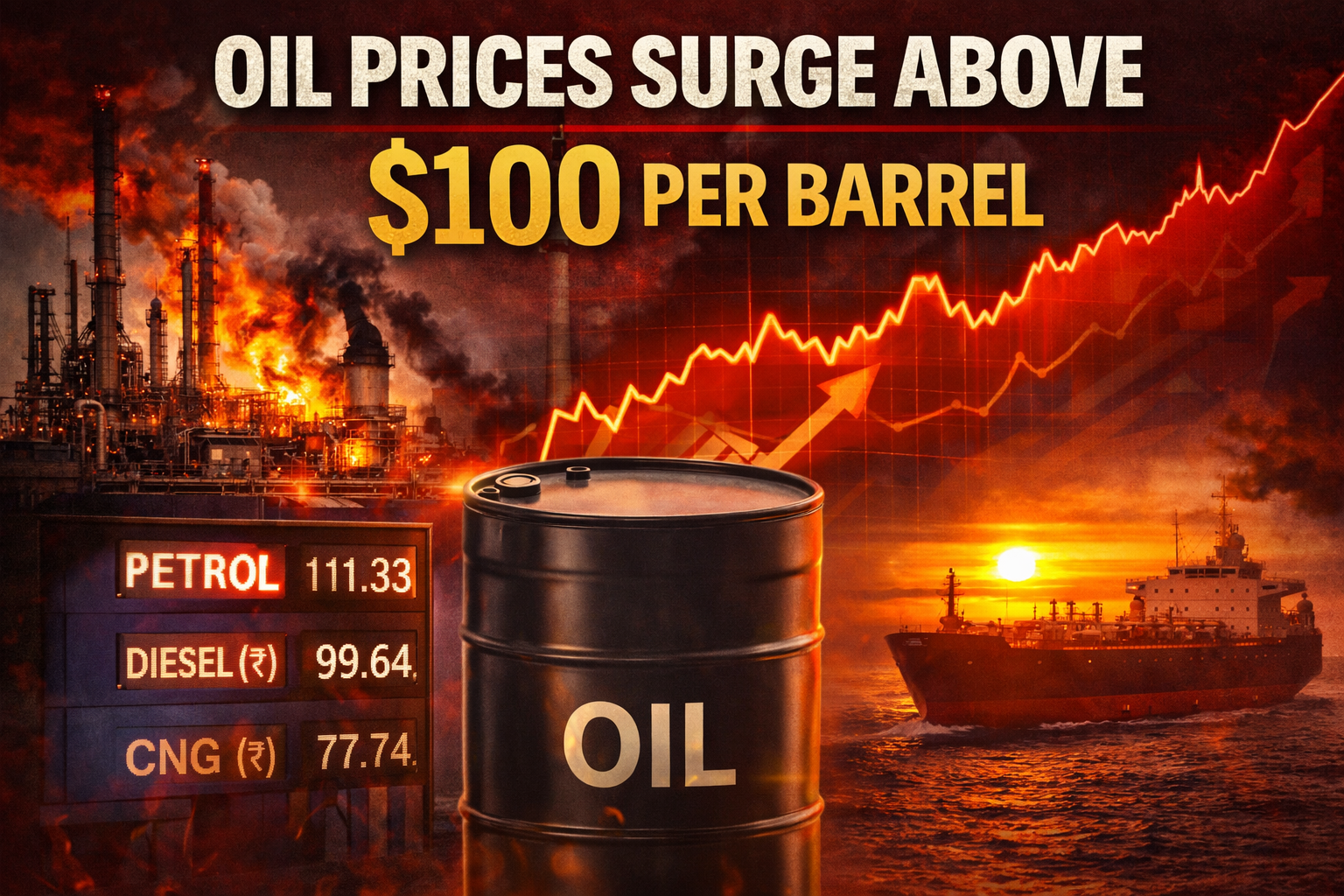
If you’ve been to a petrol pump recently, you may have already noticed it — prices inching upward again.
It’s not random.
Oil prices have now crossed the $100 per barrel mark, and the reason goes beyond simple supply and demand. What’s driving this surge is tension — not just in markets, but on the ground in the Middle East.
And when oil reacts, the entire world feels it.
⚠️ Why Prices Are Rising So Fast
At the heart of the situation is uncertainty around supply routes, especially near the Strait of Hormuz. This narrow passage carries a massive share of the world’s oil every day.
When there’s even a hint that shipments could slow down or get disrupted, prices move quickly.
Right now, that’s exactly what traders are reacting to.
There hasn’t been a full shutdown. But the fear of one is enough.
And in the oil market, fear travels fast.
🛢️ It’s Not Just About Supply — It’s About Risk
Oil pricing isn’t only based on how much is available. It’s also about how secure that supply feels.
If shipping routes look risky:
- Insurance costs go up
- Transport slows down
- Buyers start securing extra supply
All of this pushes prices higher — even before any real shortage happens.
So what we’re seeing now is partly a “risk premium” built into oil prices.
In simple terms: people are paying more because they’re unsure about tomorrow.
📈 The Ripple Effect Starts Immediately
Once oil crosses $100, it doesn’t stay isolated.
The impact spreads step by step:
- Fuel prices increase
- Transport costs rise
- Goods become more expensive
- Inflation starts climbing
You might not feel it instantly in everything, but it builds up.
A delivery fee here. A ticket price there. Grocery bills rising slowly.
Over time, it adds pressure to everyday life.
✈️ Industries Already Feeling the Heat
Some sectors feel the impact faster than others.
Airlines are usually among the first. Fuel is one of their biggest costs, so higher oil prices hit them directly. Ticket prices often follow.
Shipping and logistics companies face similar pressure. That affects global trade, especially for countries that rely heavily on imports.
Manufacturers also start feeling the squeeze. Higher energy costs mean higher production costs.
Eventually, those costs get passed on.
📉 Markets React Alongside Oil
As oil prices climb, stock markets often struggle.
Why?
Because higher energy costs can slow economic growth.
Companies spend more. Consumers spend less. Profit margins shrink.
That’s why rising oil prices and falling stock markets often go hand in hand — exactly what we’re seeing right now.
Investors become cautious. Some pull money out of riskier assets. Others wait on the sidelines.
The mood shifts quickly.
🧠 Why $100 Matters Psychologically
There’s something about the $100 mark that grabs attention.
It’s not just a number — it’s a signal.
When oil crosses that level, it tells markets that something serious is happening. It suggests instability, not just normal fluctuation.
That’s why headlines focus on it. And that’s why reactions tend to be stronger.
🌐 What It Means for Countries Like India
For countries that import most of their oil, this matters even more.
India, for example, depends heavily on global oil supply. So when prices rise internationally, the effect eventually shows up domestically.
The government may try to manage the impact — through taxes, subsidies, or policy adjustments.
But it can’t fully block global trends.
So while changes might feel gradual, they are still connected to what’s happening globally.
🔄 Could Prices Fall Again?
Yes — and that’s the uncertain part.
If tensions ease and supply routes remain open, oil prices could settle down. Markets are quick to adjust both ways.
But if the situation worsens, especially around key shipping lanes, prices could go even higher.
That’s why volatility is high right now.
Every headline matters.
Every signal moves the market.
📌 Final Thought
Oil crossing $100 isn’t just a market story.
It’s a reminder of how connected everything is.
A tension in one region…
A shipping route under pressure…
A few uncertain signals…
And suddenly, the impact reaches petrol pumps, grocery bills, and travel plans around the world.
Right now, the story is still unfolding.
And like everything tied to oil — it’s moving fast.