
Things escalated quickly.
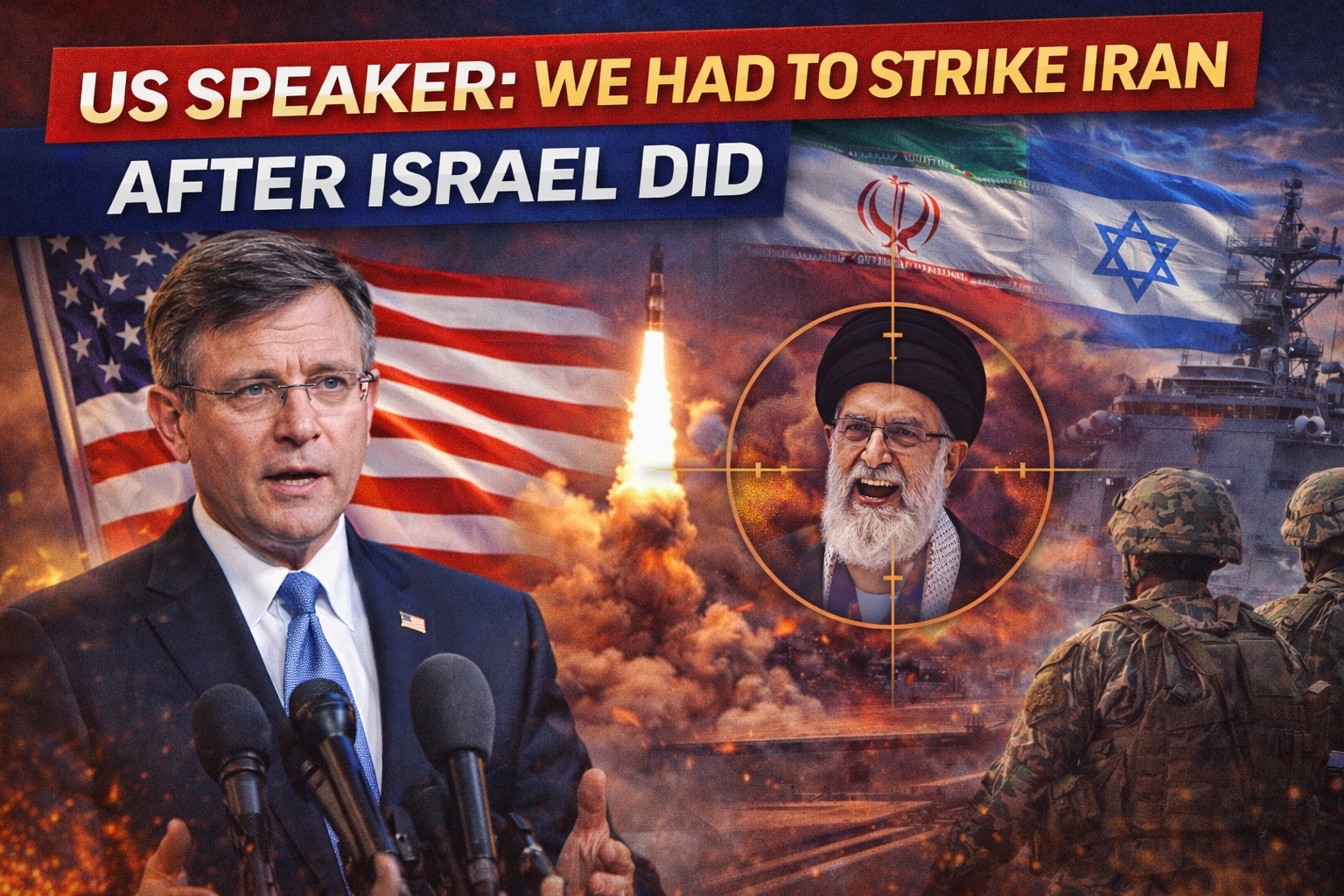
Israel launched its strike on Iranian targets. Within hours, the United States followed. Now the Speaker of the House is defending that decision, saying Washington didn’t really have the luxury of waiting.
According to him, once Israel acted, the risk changed. American forces across the region — in Iraq, Syria, the Gulf — suddenly looked more exposed.
That’s the argument.
“We Had to Act”
The Speaker’s reasoning is simple, at least on the surface. If Iran decided to retaliate, it wouldn’t necessarily limit that response to Israel. U.S. bases, ships, and personnel could become part of the equation.
So instead of waiting to see what Tehran would do, Washington moved first.
Supporters are calling it a defensive step. Critics aren’t so sure.
The Familiar Question
Was there an immediate threat to American forces?
That’s where the debate really begins.
Some lawmakers say Iran had both the capability and the history to respond aggressively. From that point of view, acting quickly makes sense.
Others argue there was no direct strike underway against U.S. troops at the time. They’re asking whether this was truly preventive — or whether it risks widening a conflict that might have stayed contained.
It’s a debate Washington has had before. And it rarely ends cleanly.
Congress Wants More Details
Now lawmakers are pushing for briefings.
They want to see the intelligence assessments. They want to understand the timeline. Most of all, they want to know whether this was a one-off operation or the start of something larger.
Short strikes can fall under executive authority. Longer engagements usually don’t.
That line matters politically.
Israel’s Calculation, America’s Consequence
Israel didn’t wait for consensus. It acted based on its own security concerns.
But once that happened, the United States faced a choice: stay out entirely and hope retaliation stayed narrow, or step in and try to shape what came next.
The Speaker’s view is that standing back wasn’t realistic.
Critics say that’s precisely what could have limited escalation.
Both arguments exist at the same time. Neither one feels simple.
What Iran Does Next Is Key
Right now, everything hinges on Tehran.
Iran has condemned the strikes. Officials have warned of consequences. Historically, Iran sometimes responds indirectly, using allied groups rather than direct confrontation.
If that pattern holds, tensions may stretch out instead of exploding.
If Iran targets U.S. assets directly, the situation changes fast.
That uncertainty is what makes this moment feel unstable, even if nothing further has happened yet.
The Political Divide at Home
In Washington, reactions split quickly.
Some lawmakers backed the decision almost immediately. Protecting American troops, they argue, can’t be delayed.
Others warned about sliding into another Middle East entanglement. That phrase still carries weight in U.S. politics.
Public reaction may depend less on speeches and more on what unfolds next.
If there’s no escalation, supporters will say the strike worked.
If violence spreads, critics will say it didn’t.
The Larger Pattern
This isn’t the first time a U.S. administration has framed a strike as necessary to prevent something worse.
Sometimes those calculations prove correct. Sometimes they age poorly.
That’s the uncomfortable truth about preemptive action: you don’t really know which category it belongs in until later.
For Now
The Speaker’s message is straightforward: Israel moved first. The United States adjusted.
Whether that adjustment calms the situation or fuels it remains to be seen.
In conflicts like this, timing can matter as much as intention.
And right now, timing is everything.